
BUILT IN THE USA. READY FOR YOUR PROJECT.
Storing Switchgear Before Installation
New switchgear may reach a jobsite before the electrical room, foundation, or installation crew is ready.
DIRECT FROM THE MANUFACTURER / NEW EQUIPMENT
THE MANUFACTURER’S PERSPECTIVE — 02
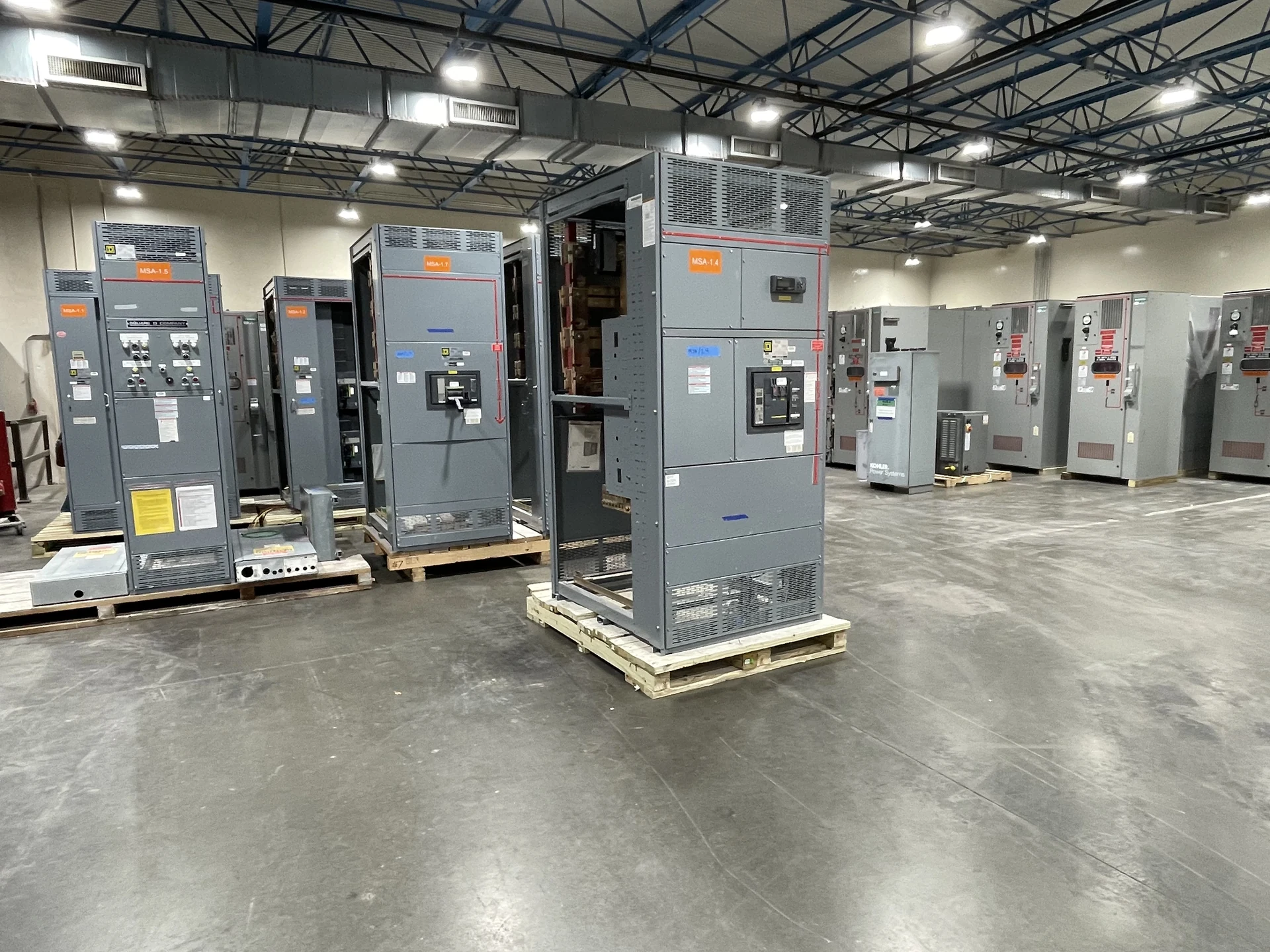
New switchgear may reach a jobsite before the electrical room, foundation, or installation crew is ready. That gap deserves its own plan: moisture, rough handling, and lost shipping components can compromise an otherwise sound assembly. Owners, contractors, and specifying engineers should agree on storage conditions and responsibilities before delivery, using the equipment manufacturer’s instructions rather than assuming shipping packaging is suitable indefinitely.
Put storage requirements into the purchase
Tell the manufacturer the expected delivery window, installation date, storage duration, and whether the proposed location is indoors or exposed to weather. Request written storage, lifting, and preservation instructions for the actual assembly and its separately packed components. Identify any special packaging, monitoring, or auxiliary power needs in the quotation rather than treating them as an afterthought.
A controlled warehouse may cost more than keeping equipment at the construction site, but it can reduce exposure while trades finish the building. Compare that cost with additional handling, transportation, insurance, and the risk of a schedule slip. Document who accepts custody, pays for extended storage, and arranges redelivery if the project is delayed.
Choose a dry, protected staging area
Select a secure location protected from rain, standing water, dust, construction traffic, and corrosive materials. The floor and supports must accommodate the shipping weights and keep the assembly clear of water accumulation. Preserve access for inspection and eventual removal; blocking a lineup behind other deliveries can create unnecessary handling and delay.
An outdoor enclosure does not automatically make an assembly suitable for outdoor storage in its shipping condition. Openings, temporary covers, and shipping splits may not provide the protection of the completed installation. Ask the manufacturer what temporary protection is acceptable and whether the proposed storage environment requires different packaging or support arrangements.
Manage condensation, not just rainfall
Equipment can collect moisture even under a roof when temperature changes cause condensation on cooler surfaces. Share anticipated temperature and humidity conditions with the manufacturer and follow its limits and monitoring guidance. Consider a conditioned space where local weather or an unfinished building makes stable conditions difficult to maintain.
Protective wrapping is not a substitute for a moisture plan: damaged barriers or trapped humidity can defeat its purpose. Follow the manufacturer’s instructions for packaging, desiccants, ventilation, and inspection. If space heaters or other preservation equipment are specified, agree on the power source and monitoring responsibilities; qualified electrical personnel must handle any electrical connections.
Receive and move each shipping section carefully
Before unloading, compare the shipment with the packing list and identify each section, loose device, and accessory. Record visible damage or wet packaging with dated photographs and notify the carrier and manufacturer promptly under the purchase terms. Keep evidence and obtain direction before disturbing suspect material; concealed issues may require a separate inspection.
Provide the rigging team with shipping drawings, weights, center-of-gravity information, and the manufacturer’s handling instructions. Confirm the route from truck to storage and later to the installation area, including door sizes and floor capacity. Do not stack sections or improvise lifting arrangements unless the manufacturer expressly permits the proposed method.
Assign inspections during the waiting period
Name a custodian and set a documented inspection schedule consistent with the manufacturer’s instructions and actual site conditions. Log the date, location, environmental observations, package condition, and any preservation measures. Check that labels and loose-parts packages remain identifiable and protected, especially when equipment is split across multiple storage locations.
For a prolonged delay, review the plan with the manufacturer rather than assuming the original packaging remains effective. Components such as batteries, electronic devices, and removable parts can have their own storage requirements. If water intrusion, corrosion, or damaged protection is observed, isolate the affected shipment from the installation schedule and request a manufacturer-directed assessment.
Release equipment into installation with records
Before moving the lineup to its final position, confirm that the receiving area is ready and that the installer has current drawings, storage history, packing lists, and handling instructions. Reconcile shipping sections and loose items against the installation scope. Agree who supplies field assembly materials and who coordinates any site-specific inspections.
Storage release is not authorization to energize. Qualified personnel should assess the equipment and complete project-specific installation, inspection, and testing in accordance with manufacturer instructions and site procedures. Include any moisture incidents, corrective decisions, and test records in the turnover package so the owner and commissioning team can make an informed acceptance decision.
LET'S BUILD SOMETHING RELIABLE — 03
Ready to talk
switchgear?
Tell us about the new equipment your project needs. Include as much or as little detail as you have today.
(951) 403-5738CALL TO DISCUSS YOUR PROJECT