
BUILT IN THE USA. READY FOR YOUR PROJECT.
Receiving Inspection for Switchgear
A receiving inspection is the first opportunity to establish whether newly manufactured switchgear arrived complete and in the condition needed for installation.
DIRECT FROM THE MANUFACTURER / NEW EQUIPMENT
THE MANUFACTURER’S PERSPECTIVE — 02
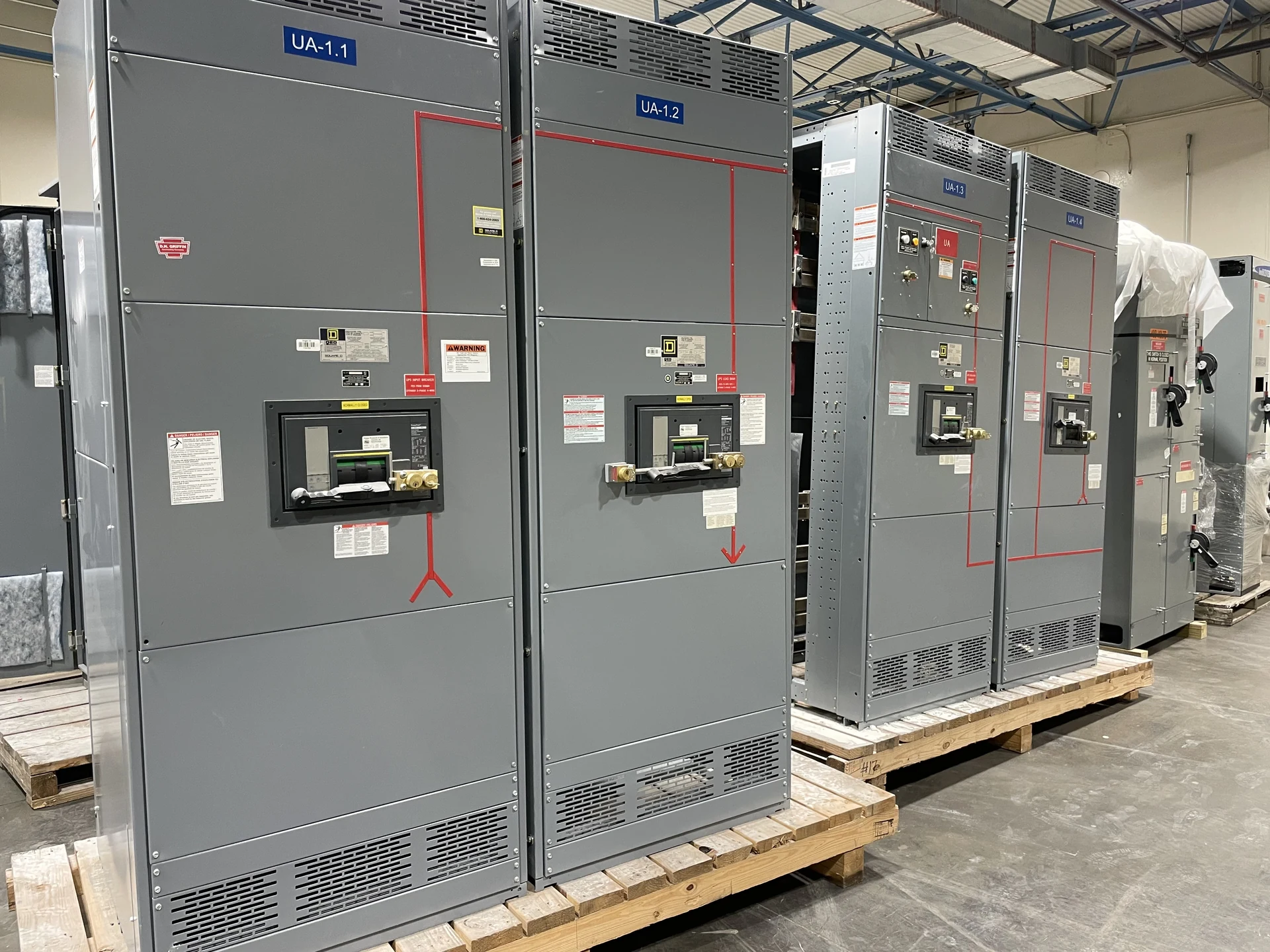
A receiving inspection is the first opportunity to establish whether newly manufactured switchgear arrived complete and in the condition needed for installation. For owners, contractors, and specifying engineers, the goal is not simply to count crates: it is to create a reliable record, identify transit damage, and protect the assembly until qualified personnel can prepare it for service.
Prepare the receiving team before delivery
Assign a site representative to receive the shipment and agree on who can stop unloading if a problem is visible. Share the expected delivery date, shipping configuration, weights, dimensions, unloading requirements, and manufacturer handling instructions with the rigging contractor. Confirm that the route, lifting equipment, and protected staging space suit the shipment.
Keep the purchase order, approved shipping information, packing list, and carrier paperwork accessible. Arrange time for inspection while the carrier is present, and identify whom to notify at the manufacturer, carrier, and owner. A rushed delivery can obscure when damage occurred and delay both a claim and installation.
Compare every shipping piece with the paperwork
Match the number and identification of crates, wrapped sections, pallets, and separate packages to the packing list and delivery receipt. Record shortages and discrepancies by shipping mark or item number rather than relying on a general note. A lineup shipped in multiple sections may arrive with field-connection hardware and accessories packaged separately.
Account for loose devices, keys, manuals, and other listed items without assuming that every part travels inside the main enclosure. Check the shipment identification against the project and approved drawings. If a package appears missing, verify whether a separate shipment is documented before the site team closes the receiving record.
Document visible and concealed damage
Before unloading, photograph the shipment and its restraint or packaging condition where safe access permits. Look for crushed corners, punctures, displaced crates, moisture, or other signs of mishandling. If tilt or impact indicators are supplied, record their condition; an unchanged indicator alone does not establish that the contents are undamaged.
Describe visible exceptions on the carrier delivery documents before signing, and retain a copy. Photograph shipping labels and damage with enough context to identify the affected section. If damage is discovered later during authorized unpacking, document it promptly, preserve packaging and evidence, and notify the carrier and manufacturer under the applicable contract and claim requirements.
Review the assembly without treating it as ready to energize
Once handling and unpacking are authorized, have qualified personnel compare accessible nameplates, section identifiers, and visible features with approved submittals. Look for enclosure deformation, damaged finishes, loose shipping material, or moisture. Record discrepancies for engineering review rather than assuming a visual inspection establishes internal condition or electrical suitability.
A receiving check is distinct from installation, acceptance testing, and commissioning. Do not open electrical compartments or perform electrical tests as an improvised dockside inspection. The responsible contractor should plan any internal examination and subsequent checks using manufacturer instructions, site safety procedures, and personnel qualified for the work.
Protect the equipment until installation
Move accepted sections to a secure, dry, protected location consistent with the manufacturer’s storage and handling instructions. Coordinate with the rigging contractor on approved lifting provisions and keep identification visible. Shipping wrap is not automatically suitable for long-term weather protection; confirm the required covering, ventilation, and support arrangements for the actual site.
Consider condensation, temperature variation, construction dust, and the planned storage period. If the manufacturer specifies environmental controls or space heaters, define who supplies and monitors them and who is qualified to make any connections. Keep separately packed accessories traceable and inspect stored equipment periodically according to the storage plan.
Close the loop on discrepancies and schedule
Create a receiving report that ties photographs, packing-list checks, carrier exceptions, equipment identifiers, and storage location to the purchase order. Assign an owner and due date to each missing or damaged item. Send the report to the relevant project parties and obtain a disposition before affected equipment is incorporated into the work.
Ask the manufacturer what documentation or additional evaluation is needed to resolve each issue; coordinate carrier or insurance claims separately as required. Track how the resolution affects installation, inspections, and commissioning milestones. The final handoff should include the accepted discrepancy disposition and updated records, not merely the signed delivery receipt.
LET'S BUILD SOMETHING RELIABLE — 03
Ready to talk
switchgear?
Tell us about the new equipment your project needs. Include as much or as little detail as you have today.
(951) 403-5738CALL TO DISCUSS YOUR PROJECT