
BUILT IN THE USA. READY FOR YOUR PROJECT.
Planning Spare Feeders
A spare feeder is a decision about how much future work to do today, not a guarantee of extra electrical capacity.
DIRECT FROM THE MANUFACTURER / NEW EQUIPMENT
THE MANUFACTURER’S PERSPECTIVE — 02
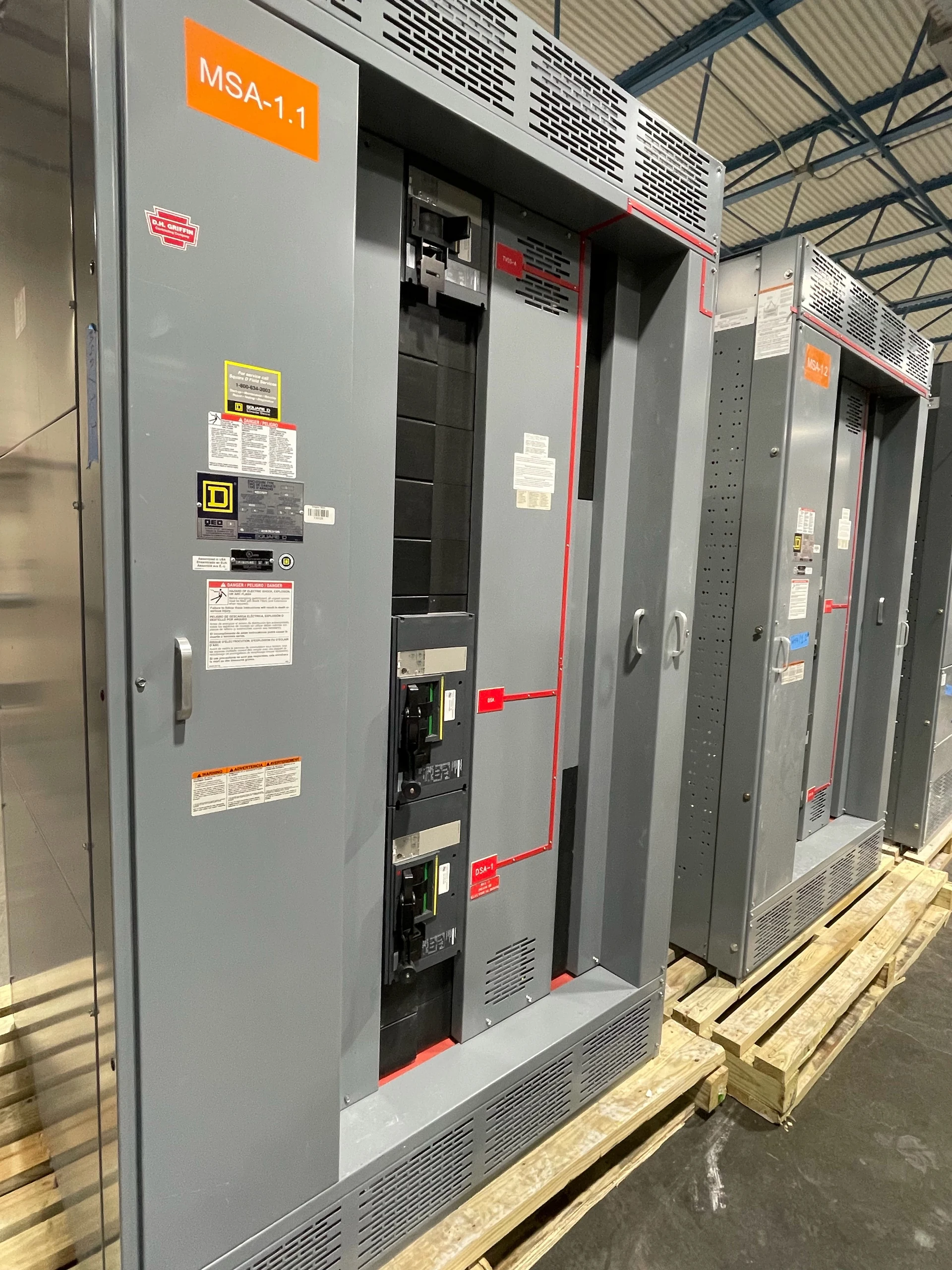
A spare feeder is a decision about how much future work to do today, not a guarantee of extra electrical capacity. Specifying engineers, contractors and facility owners can choose an installed spare breaker, a prepared position or an allowance for a later addition. Each choice trades initial investment and space against the information, approvals and outage planning needed when a new load arrives.
Choose the level of readiness
An installed spare breaker is supplied as part of the new assembly but reserved for a future circuit. Its poles, frame, trip functions and connection provisions must suit an expected application. Buying the device now can reduce later procurement uncertainty, but the ultimate load may need different protection or a different conductor arrangement.
A prepared space defers the breaker purchase while reserving a defined position. State whether mounting hardware, bus connections, barriers, terminals and covers are included; a blank panel alone does not establish that a device can be added. A future section or lineup extension reserves still more flexibility, but its mechanical and electrical interfaces must be engineered.
Separate physical space from electrical capacity
Give the manufacturer a one-line diagram and load schedule showing existing planned feeders, proposed future loads, source configuration and expected operating scenarios. Identify the likely load type, demand, voltage, phase and anticipated connection date. A future motor or distribution panel can impose very different starting, protection and conductor requirements.
The engineer should assess source, transformer, main device and bus capacity together, including realistic demand and coincident operation. Adding spare breaker ampere ratings is not a substitute for a load study, and an empty position does not create unused capacity. Ambient conditions, neutral loading and other project-specific limitations also belong in the review.
Define the future connection path
Reserve a route for the expected feeder, not just a position in the lineup. Document top or bottom cable entry, conductor quantity and size assumptions, termination space, grounding and any neutral connection. Coordinate conduit or tray space with the contractor and verify that the proposed cable bends and access fit the equipment design.
A future section may affect overall width, end clearance, structural support and shipping arrangement. Ask the manufacturer to identify the extension interface, required bus provisions and any limitations on compatible additions. Room planning should preserve applicable working and maintenance clearances rather than treating every vacant wall area as usable equipment space.
Review protection and assembly compatibility
A spare position needs more than a nominal current allowance. The engineer should review system voltage, continuous current, available fault current, device interrupting duty and the assembly short-circuit rating for the proposed configuration. Breaker poles, trip characteristics and protective settings must be considered with the upstream and downstream devices.
A later addition should be checked against the actual assembly design, permitted device types and applicable listing or evaluation requirements, not selected by physical fit alone. Where an appropriate switchboard requires a UL 891 listing, confirm the listing and scope for the specific configuration. Protection coordination and arc-flash studies may also need updating when the load is defined.
Make alternatives comparable in the quote
Request separate pricing for an installed spare breaker, a prepared space and any proposed expansion provision. Identify what each option includes and excludes: device and mounting parts, bus work, barriers, labels, metering, control wiring and cable terminals. This makes the initial expenditure comparable to the expected cost and disruption of a later project.
As a direct American manufacturer of new distribution assemblies, we can review the requested provisions against the project inputs. Ask for a one-line, feeder schedule, elevation and written exceptions that identify the reserved positions and their limitations. If component origin matters, state that requirement and confirm actual sourcing and availability rather than assuming every component qualifies.
Plan the decision and later handoff
Decide which future loads are credible before approving drawings and releasing the assembly for manufacture. Late changes can affect the layout, component selection, submittals and procurement sequence. Confirm the review milestones and current component availability with the manufacturer; neither a prepared space nor an installed spare guarantees a particular future delivery schedule.
Keep approved drawings, device data, test records and a spare-position register with the facility documents. Before adding a load, the owner should arrange an updated engineering review and coordinate permits, outage windows and field testing with the contractor. Qualified personnel must perform electrical work under applicable site procedures, codes and manufacturer instructions.
LET'S BUILD SOMETHING RELIABLE — 03
Ready to talk
switchgear?
Tell us about the new equipment your project needs. Include as much or as little detail as you have today.
(951) 403-5738CALL TO DISCUSS YOUR PROJECT