
BUILT IN THE USA. READY FOR YOUR PROJECT.
Understanding the Scope of UL 891
UL 891 is a product safety standard for switchboards, not a blanket designation for every assembly called switchgear.
DIRECT FROM THE MANUFACTURER / NEW EQUIPMENT
THE MANUFACTURER’S PERSPECTIVE — 02
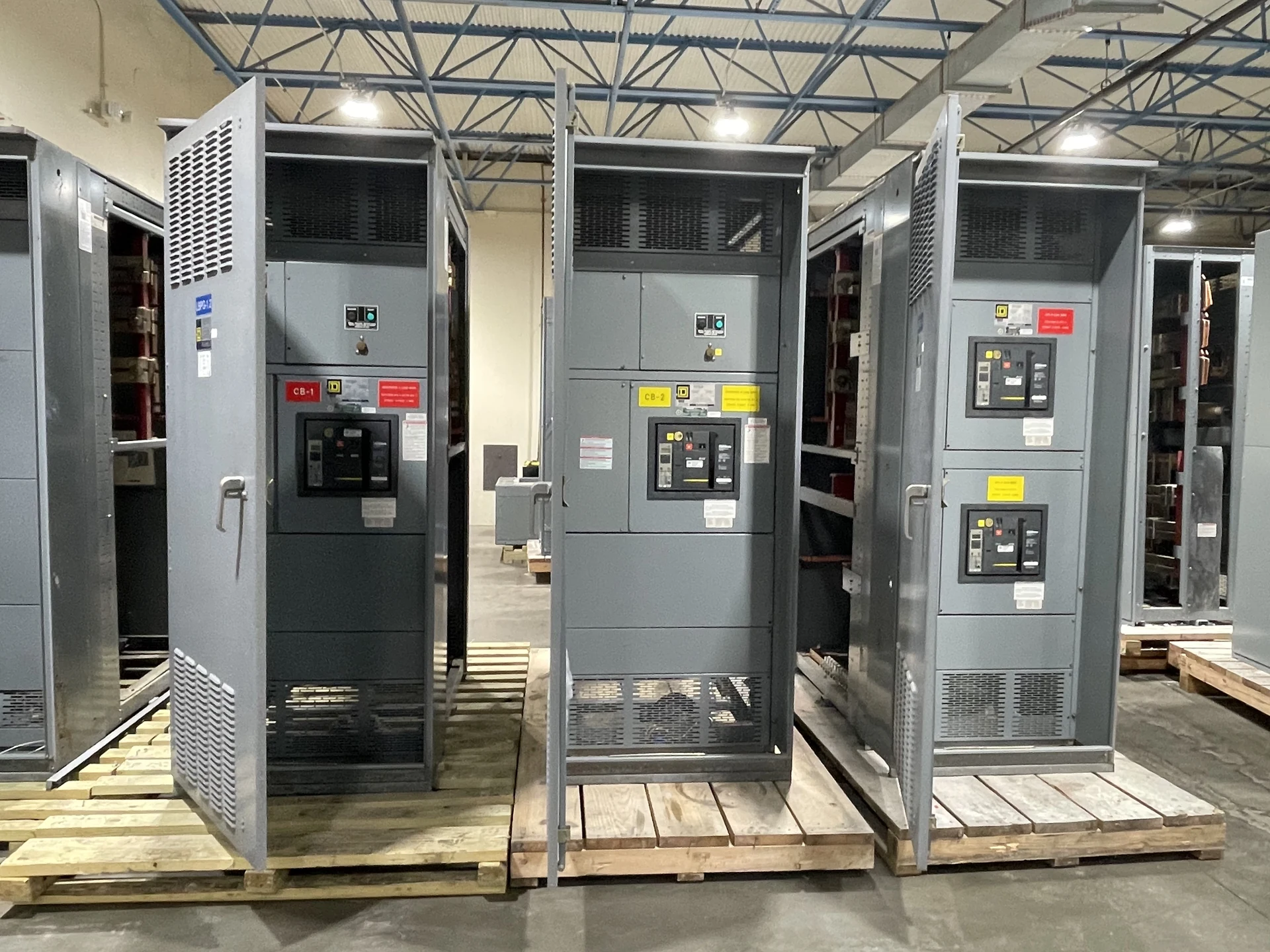
UL 891 is a product safety standard for switchboards, not a blanket designation for every assembly called switchgear. For a new distribution project, the useful question is whether the proposed switchboard, with its actual devices and ratings, can be supplied with the required project-specific listing. Engineers, contractors and owners should establish that answer before treating a specification or a component label as proof of acceptance.
Start with the equipment, not the label
UL 891 addresses switchboards, including dead-front designs that distribute power through buses and protective devices. A switchboard may serve as service equipment or as downstream distribution, depending on its construction and markings. A project that requires service equipment must identify that use explicitly; a switchboard listing alone does not establish that every proposed service arrangement is suitable.
Other equipment categories have different standards. For example, UL 1558 addresses metal-enclosed low-voltage power circuit breaker switchgear. Do not substitute one equipment class for another merely because both distribute power: the required protection, maintenance access, device construction and coordination objectives may differ. The specifying engineer should identify the appropriate equipment category and applicable project requirements.
Confirm the complete assembly listing
A listed breaker or recognized component is not, by itself, a listed switchboard. The overall assembly must be evaluated or built within the applicable certification program and authorized construction limits. Ask the manufacturer to identify the proposed listing agency, the standard and the specific configuration covered, including any limitations attached to the intended use.
Request the relevant certification information and proposed nameplate or marking details during submittal review. For a UL Solutions listing, Product iQ can help verify the manufacturer and product category; compare the listing information with the actual design and consult the certifier when scope is unclear. Final markings and documentation should be checked against the delivered assembly.
Match ratings to the power system
Provide a current one-line diagram, system voltage and configuration, anticipated demand, feeder schedule and available fault current at the proposed location. The manufacturer and design team can then review bus and device continuous-current ratings, terminal capacity and the assembly short-circuit current rating. A larger bus current rating does not automatically mean the assembly can withstand a higher fault current.
Also identify upstream protection and the fault study assumptions. A marked short-circuit rating may depend on particular protective devices or a specified series combination; a substitute device can change the acceptable application. The engineer should verify interrupting ratings and coordination across the relevant fault range rather than assume that a listed switchboard guarantees selective coordination.
Understand construction and listing limits
Switchboards can offer efficient distribution in a compact layout, but their construction and access provisions vary. Where an owner needs particular compartmentation, removable devices or maintenance flexibility, put those requirements in the request instead of assuming they follow from UL 891. The engineer can compare the resulting design with alternative equipment against space, continuity and protection needs.
A design change can affect its certification basis. For example, changing a breaker type, enclosure arrangement or bus construction may require review of the permitted configuration and ratings. Request written approval of substitutions and confirm whether additional evaluation is needed before releasing a revised design; an acceptable change on one project is not automatically acceptable on another.
Resolve utility and field interfaces
For a service-entrance application, coordinate the utility’s metering and termination requirements with the project’s service equipment markings and grounding design. Supply cable sizes and quantities, entry direction, available wall and floor space, and any needed meter compartments. These details affect the physical layout and can constrain a design that looked straightforward on the one-line.
The contractor should confirm delivery access, shipping splits, working clearances and the division of responsibility for field connections. The manufacturer’s drawings should show connection locations and relevant assembly boundaries. Installation, testing and energization belong to qualified personnel following applicable codes, utility requirements, site procedures and the instructions for the actual equipment.
Make listing part of procurement and turnover
When requesting a quotation directly from the manufacturer, identify the required standard, listing agency if specified, enclosure environment, protective devices, documentation and inspection expectations. Ask for any exceptions in writing. Compare proposals on the same scope: a drawing package, certification evidence and witnessed testing are not interchangeable with a general statement that components meet a standard.
Allow time for drawing review, utility and authority having jurisdiction questions, component procurement and any project-specific certification review. Revisions after approval can affect both schedule and cost. At turnover, retain approved and final drawings, equipment markings, instructions and agreed test records so the owner can verify the supplied configuration and plan future work responsibly.
LET'S BUILD SOMETHING RELIABLE — 03
Ready to talk
switchgear?
Tell us about the new equipment your project needs. Include as much or as little detail as you have today.
(951) 403-5738CALL TO DISCUSS YOUR PROJECT