
BUILT IN THE USA. READY FOR YOUR PROJECT.
Metal-Enclosed Switchgear for Industrial Facilities
An industrial plant may need switching and protection for process feeders, transformers and large motors while keeping unrelated production areas available.
DIRECT FROM THE MANUFACTURER / NEW EQUIPMENT
THE MANUFACTURER’S PERSPECTIVE — 02
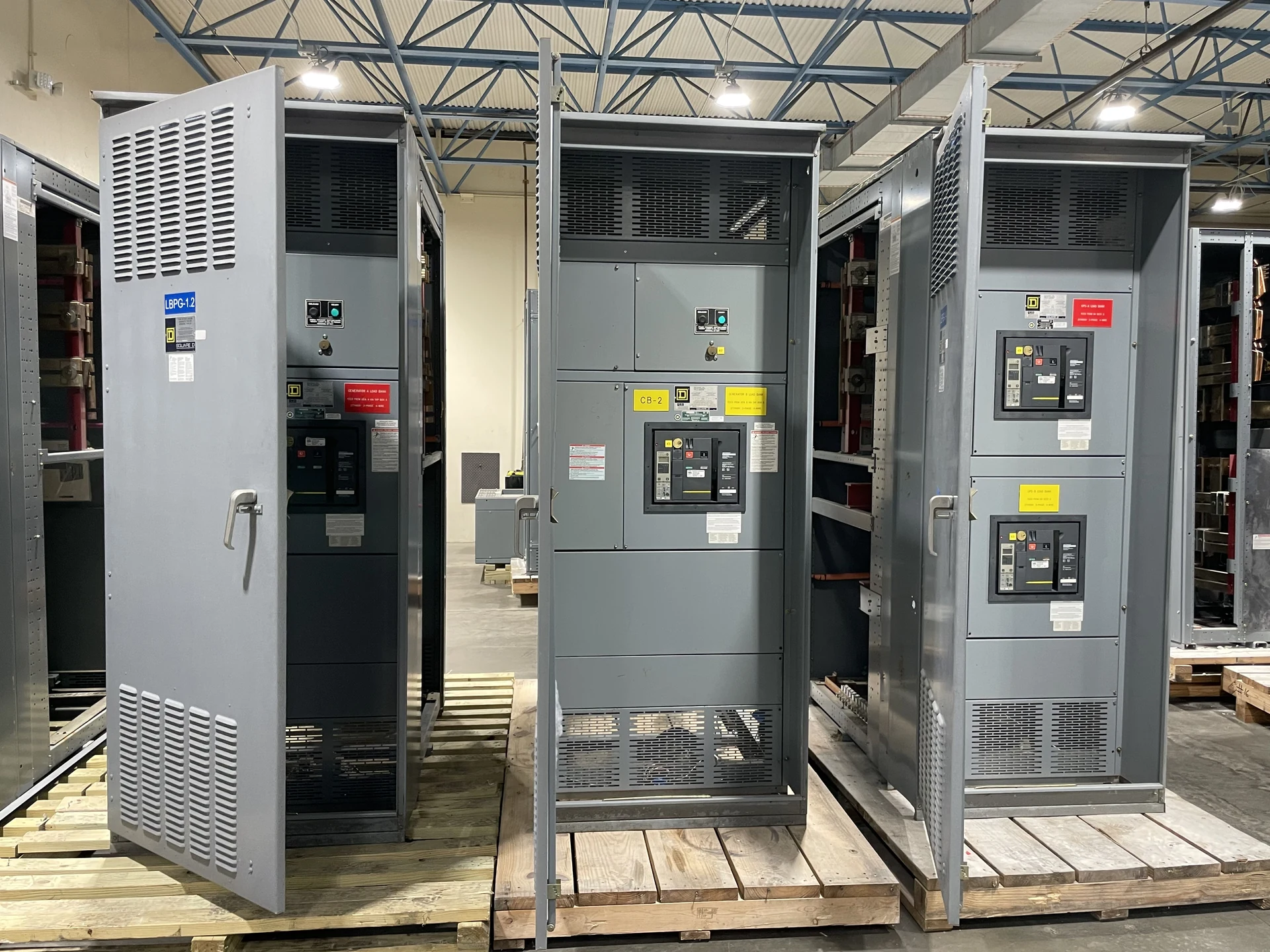
An industrial plant may need switching and protection for process feeders, transformers and large motors while keeping unrelated production areas available. Metal-enclosed switchgear can organize those functions in a purpose-designed lineup, but the enclosure name alone does not determine which devices, protective features or service arrangements are included. Owners and specifiers should define operating priorities and system conditions before requesting a new assembly.
Match the switching device to the duty
Metal-enclosed construction describes a family of equipment, not a promise that every lineup has the compartmentation or withdrawable devices associated with metal-clad switchgear. Depending on the application, an engineered design may incorporate load-interrupter switches, fuses or circuit breakers. A simple disconnect should not be assumed to interrupt load or fault current; its intended duties must be verified.
A fused switch may offer a different combination of cost, footprint, protection characteristics and restoration requirements than a breaker with protective relays. Ask the manufacturer to identify the actual devices, their functions and maintainability. Compare the complete assembly against the plant specification and applicable standards, rather than choosing solely from a generic product label.
Describe the motors and production process
A motor feeder can experience substantial starting current even when its running load is modest. Provide motor nameplate data, starting method, starting frequency, load inertia and known acceleration time to the design team. A simultaneous restart after a process interruption may affect voltage and source capacity differently from one motor starting on its own.
The engineer should assess starting voltage drop and protection performance alongside transformer capacity and feeder impedance. Large drives or soft starters may change the current profile and introduce additional interface requirements. Distinguish switchgear feeder protection from the motor controller and motor-specific protection supplied elsewhere, so neither scope is assumed to cover a missing function.
Coordinate feeder protection with the whole system
Supply an up-to-date one-line diagram, source characteristics, available fault-current information and downstream device data. Motors can contribute to certain faults, so the study engineer should evaluate their contribution as well as the utility and any on-site sources. Verify assembly short-circuit withstand and device interrupting duties for the calculated conditions and clearing times.
Fuse curves or relay settings need to be considered with upstream and downstream protective devices, motor starting and the desired isolation of a faulted feeder. Selective coordination may involve tradeoffs with equipment protection and clearing time; it cannot be inferred from a drawing alone. Identify who performs the study, supplies settings and reviews any design changes.
Plan continuity and access together
Map which feeders can tolerate a shutdown and which support a continuous process. Separate sections, alternate source arrangements or spare feeder positions may be worth evaluating, but each adds space, interface and cost implications. For multiple sources, define permissible operating states and interlocks; do not assume a tie or transfer feature exists unless specifically engineered.
Review the layout for cable termination, inspection and component access, including the working space required by applicable rules. Compartment boundaries and isolation provisions vary by construction; request drawings that show the proposed arrangement. The owner and qualified electrical contractor should plan outages, temporary supply and commissioning around production, with work performed under site safety procedures.
Define controls and plant interfaces
List the signals needed by the plant control system: for example, device status, protective trips, alarms and remote-control requests. Agree on hardwired or network interfaces, protocol, point list and the boundary between manufacturer and controls contractor. Local and remote authority, permissives and loss-of-communications behavior should be documented before the control wiring is finalized.
Identify the source and reliability requirements for trip and control power, plus any interface to a battery system or external supply. Coordinate instrument transformer ratios and accuracy with protection and metering needs. Factory checks can verify agreed logic and indications, while site integration tests require clear ownership of connected equipment and final acceptance.
Purchase against a defined project package
For a meaningful quotation, include system voltage and frequency, load and feeder schedules, fault study data, indoor or outdoor location, ambient conditions, contaminants, cable entry and site dimensions. Specify required enclosure protection, coatings, access and heat management for the actual environment. State any U.S. component-origin requirements separately and confirm sourcing and availability for the proposed bill of materials.
As a direct American manufacturer serving San Antonio, South Texas and nationwide, we can review the defined scope for a newly manufactured assembly. Request one-lines, elevations, device schedules, wiring drawings, test records, manuals and documented exceptions as applicable. Coordinate approval milestones, component procurement, factory testing, shipping and the plant outage; delivery timing depends on those project-specific decisions.
LET'S BUILD SOMETHING RELIABLE — 03
Ready to talk
switchgear?
Tell us about the new equipment your project needs. Include as much or as little detail as you have today.
(951) 403-5738CALL TO DISCUSS YOUR PROJECT