
BUILT IN THE USA. READY FOR YOUR PROJECT.
Electrical Busway for Manufacturing Plants
A production line rarely stays in the same arrangement forever.
DIRECT FROM THE MANUFACTURER / NEW EQUIPMENT
THE MANUFACTURER’S PERSPECTIVE — 02
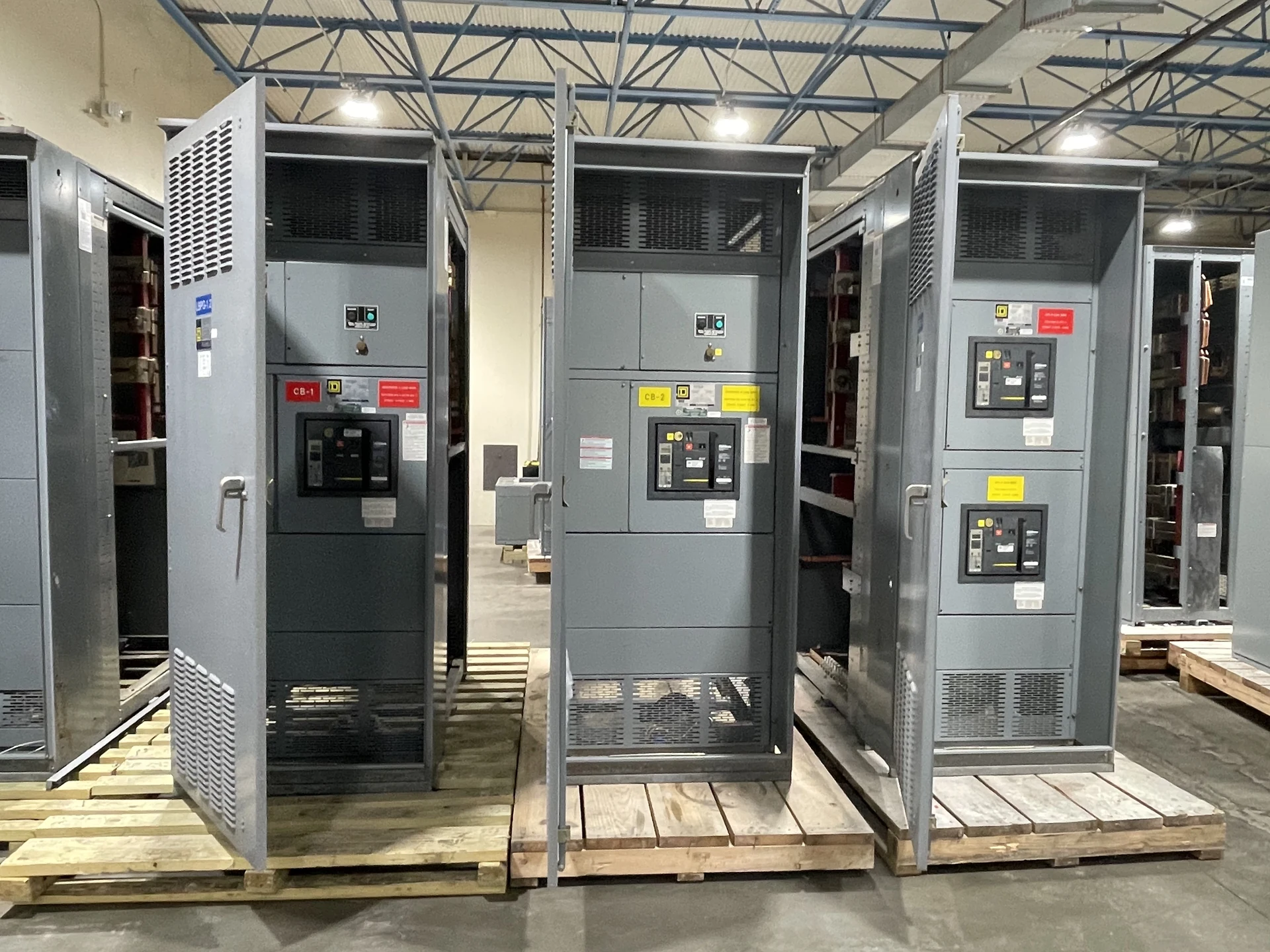
A production line rarely stays in the same arrangement forever. Busway can distribute power along a manufacturing floor while giving the project team a planned way to serve equipment at multiple points. For owners and specifiers in San Antonio, across South Texas, and nationwide, the important decision is not simply whether to use busway, but how its capacity, protection, routing, and switchgear connections support the plant’s operating plan.
Map the line before choosing the distribution path
Start with a scaled equipment layout showing present machines, likely production changes, and the location of the supply assembly. Identify motor loads, drives, process controls, and other major consumers, including which loads can run together. This map helps the engineer compare a common overhead busway route with individual cable feeders or a combination of both.
A tap-off arrangement can make later changes easier where machines are relocated along a defined corridor, but it does not make every location automatically usable. Tap positions, equipment dimensions, access, and compatible tap units must be planned. A stable line with few loads or difficult overhead congestion may justify a conventional feeder approach instead.
Size for operating conditions and future demand
Provide the system voltage, phase and wire configuration, connected loads, expected demand, operating cycles, and anticipated additions. Motor starting and large simultaneous loads can affect voltage drop along a long run. The design engineer should evaluate the actual route and load distribution rather than selecting busway solely from the nameplate total at one end.
Variable-frequency drives and other nonlinear loads may introduce harmonics and additional heating considerations. Specify ambient temperature, ventilation, and any unusual operating conditions so ratings and applicable adjustment factors can be checked. Spare ampacity, tap locations, and upstream feeder capacity must be evaluated together; an unused tap position alone is not proof that a future machine can be supplied.
Coordinate protection from source to machine
The project one-line should show the source, switchboard or switchgear feeder device, busway run, tap-off devices, and intended downstream equipment. Supply available fault-current information and the protection study criteria. The engineer must check the busway assembly and each associated device against the available duty, while considering how the upstream device interacts with tap-off protection.
Selective coordination can reduce the impact of a fault on neighboring processes, but the achievable result depends on device characteristics and the fault range. Agree who will develop the study and determine settings. Machine disconnects, tap-off protection, grounding, and any control interfaces require a coordinated design under the applicable code and equipment instructions.
Resolve the switchgear connection and physical route
The distribution assembly and busway suppliers need a common interface drawing, not just matching ampere labels. Review the connection arrangement, phase sequence, neutral and grounding provisions, enclosure openings, and allowable tolerances. Identify whether an engineered busway connection or a cable transition is included, and confirm compatibility and listing requirements for the particular equipment.
Above the floor, structural supports, elevation changes, expansion or movement provisions, and clearance around other services influence the route. Identify dust, washdown, humidity, heat, or corrosive exposure and select construction suited to those conditions. The building and electrical designers should coordinate supports and working space with the installer before dimensions are released.
Compare complete quotes and documentation
A useful request for quotation includes the one-line, load schedule, route drawings, required tap locations, site conditions, fault data, and the target installation sequence. Ask the direct manufacturer of the new distribution assembly to identify its interface scope and confirm whether the busway, fittings, tap units, supports, and field connections are included or provided separately.
Compare proposals on the same basis: device functions, applicable equipment standards and project-specific listings, drawings, inspection or test records, shipping sections, and exclusions. For a specified switchboard, verify whether UL 891 listing applies to the proposed assembly; busway has its own applicable requirements. Resolve substitutions and approval responsibilities before ordering.
Plan installation around production and access
Schedule design review, component procurement, fabrication, delivery, and installation as linked activities rather than assuming a fixed lead time. Confirm when approved drawings are needed and when the plant can release the work area. If the connection affects an operating line, the owner and contractor should coordinate an outage window, affected loads, and a contingency plan.
The handoff should include approved drawings, identification of tap locations, equipment instructions, applicable test records, and clear ownership of field inspection and commissioning. Preserve access for future examination and maintenance without obstructing production paths. Qualified electrical personnel must perform installation, verification, and any energized work under the site’s safety procedures and applicable requirements.
LET'S BUILD SOMETHING RELIABLE — 03
Ready to talk
switchgear?
Tell us about the new equipment your project needs. Include as much or as little detail as you have today.
(951) 403-5738CALL TO DISCUSS YOUR PROJECT