
BUILT IN THE USA. READY FOR YOUR PROJECT.
Service Entrance Switchgear for Military Bases
A military installation may depend on one utility connection to serve facilities with very different missions and outage tolerances.
DIRECT FROM THE MANUFACTURER / NEW EQUIPMENT
THE MANUFACTURER’S PERSPECTIVE — 02
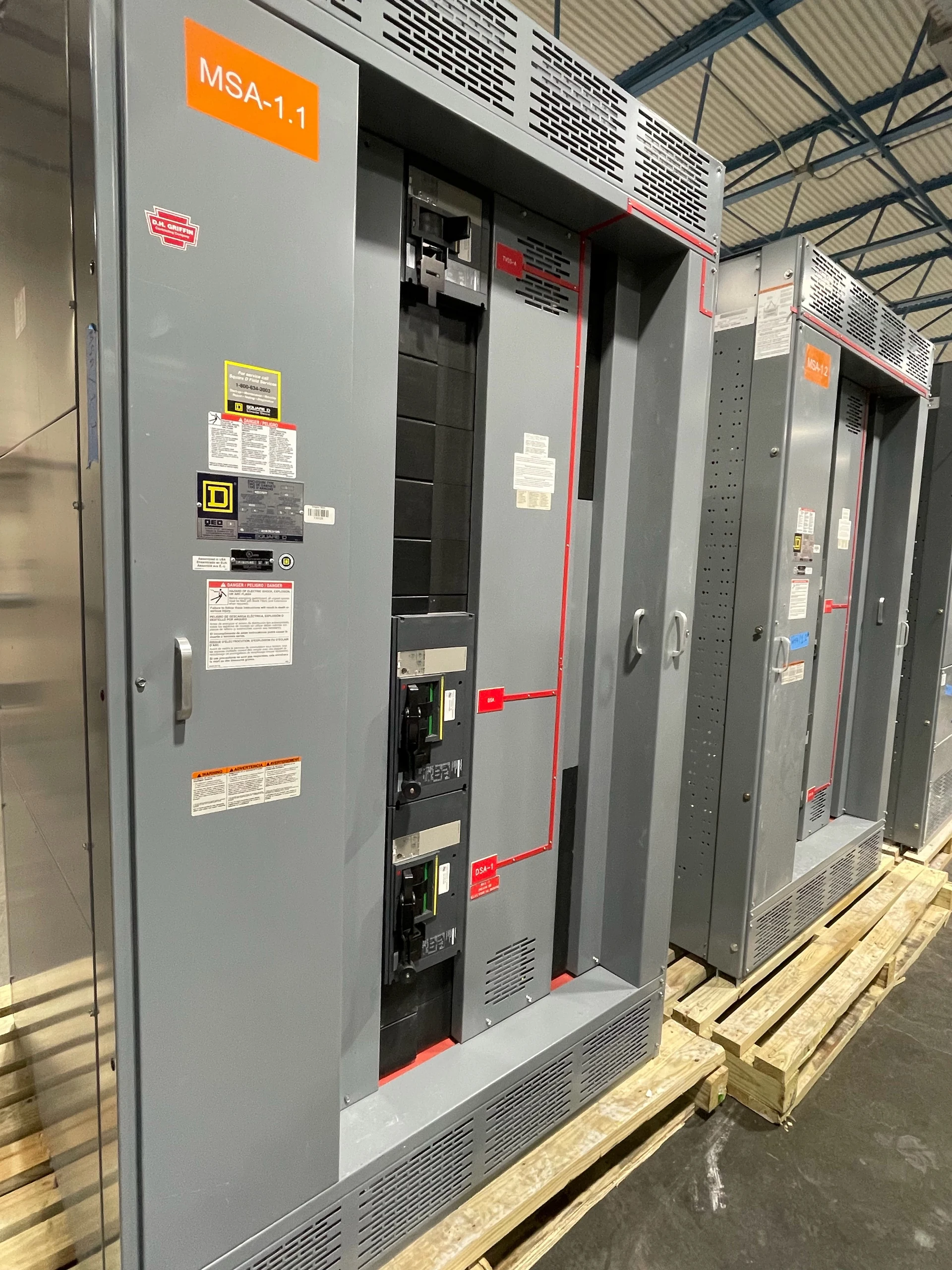
A military installation may depend on one utility connection to serve facilities with very different missions and outage tolerances. Service entrance equipment establishes a critical boundary between the utility supply and the installation’s distribution system. For owners and specifiers, the purchase decision starts with a defensible electrical design and an agreed plan for keeping essential functions supported while the new assembly is installed.
Define the service boundary before selecting construction
Start with an installation one-line showing the utility source, point of service, transformer arrangement, service disconnecting means and feeders to the various facilities. Confirm who owns each interface and who approves the service arrangement. A base with several separately metered buildings may have different requirements from a campus supplied through a common distribution system.
Ask the utility for its service characteristics, available fault-current information, metering standards and connection requirements. Give the manufacturer the applicable nominal voltage, phase and wire configuration, calculated demand, anticipated load changes and conductor details. The engineer can then determine whether the specified application calls for switchgear, a service switchboard or another appropriate assembly.
Connect mission priorities to source architecture
Not every building requires the same continuity strategy. Identify which communications, security, operations or support loads have special restoration priorities, and show their downstream paths. Separating critical and ordinary feeders may help limit the effect of a fault or planned outage, but can increase equipment size, protection complexity and project cost.
Where generators, alternate utility sources or transfer equipment are involved, document their connection points and intended operating states. The design team must coordinate source capacity, grounding, protection, control signals and any required interlocks. A service entrance assembly alone does not establish backup power or prevent unintended source paralleling; those functions need an engineered system design.
Coordinate protection and the utility meter
The service assembly must be evaluated against both normal loading and the fault duty available at its location. Provide the short-circuit study basis, protective-device preferences and coordination objectives. The engineer should review device interrupting capability together with assembly ratings and upstream and downstream clearing behavior rather than assuming one rating establishes complete system suitability.
Revenue metering and owner monitoring are separate interfaces. Confirm utility access, instrument transformer provisions, wiring boundaries, sealing requirements and meter ownership before approving a layout. If the installation also needs power-quality data or an alarm connection, specify the measured quantities, communication protocol and network boundary without assuming the utility meter will provide them.
Resolve installation and security constraints
Provide room or pad drawings, incoming and outgoing cable directions, equipment access routes and environmental conditions. The design must account for working space, ventilation, anchorage, cable bending and maintenance access under applicable requirements. Shipping splits can make a large lineup easier to deliver but add field joining and inspection responsibilities.
Military project specifications may impose access screening, escorted deliveries, restricted photography or controlled handling of drawings. Identify the actual contract requirements and approved document-transfer channels early; do not place sensitive installation diagrams in an unrestricted request. Confirm security review milestones and distinguish site access authorization from electrical inspection or equipment acceptance.
Compare proposals against the installation specification
A useful request includes the one-line, load schedule, utility criteria, enclosure conditions, protection and metering needs, desired inspection scope and requested delivery destination. Include the owner’s applicable specifications, codes and contractual requirements, including any component-origin provisions. The direct manufacturer can then identify feasibility questions, proposed materials and exceptions; component origin and availability require confirmation.
Compare quotations by the same boundaries: equipment sections, devices, controls, shipping, drawings, tests and field support, if requested. Ask which standards and listings apply to the proposed construction. UL 891 can be relevant to an appropriate switchboard; verify the project-specific listing and configuration rather than treating it as a blanket switchgear designation.
Plan reviews, acceptance and an owner-led cutover
Agree on a schedule that shows utility review, submittal approval, component procurement, fabrication, factory inspection and delivery as dependencies rather than guaranteed durations. Request drawings showing dimensions, connections, device schedules and control interfaces, plus agreed test records and manuals. Assign reviewers and a process for resolving changes before fabrication commitments are made.
The owner and electrical contractor should coordinate affected facilities, outage windows, temporary supply needs and a contingency plan with the utility and mission stakeholders. Qualified personnel perform installation, testing, protective settings and energization under site procedures and applicable requirements. Turnover should identify final drawings, test results, operating instructions and remaining responsibilities for each interface.
LET'S BUILD SOMETHING RELIABLE — 03
Ready to talk
switchgear?
Tell us about the new equipment your project needs. Include as much or as little detail as you have today.
(951) 403-5738CALL TO DISCUSS YOUR PROJECT