
BUILT IN THE USA. READY FOR YOUR PROJECT.
Switchgear Pricing
A meaningful switchgear price starts with the electrical duty and the work included, not simply the size of a lineup.
DIRECT FROM THE MANUFACTURER / NEW EQUIPMENT
THE MANUFACTURER’S PERSPECTIVE — 02
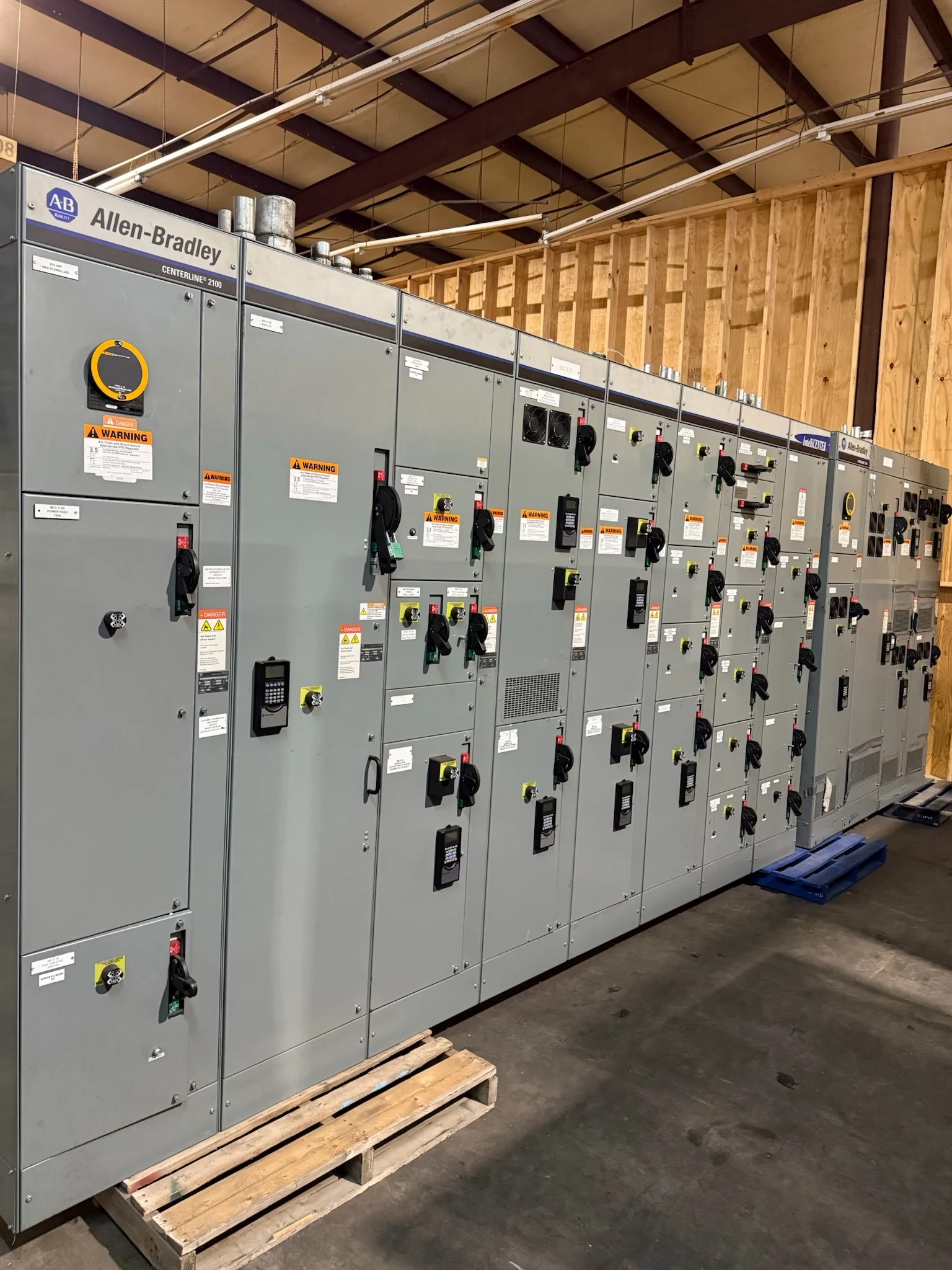
A meaningful switchgear price starts with the electrical duty and the work included, not simply the size of a lineup. A direct American manufacturer of new power-distribution assemblies can help owners, engineers and contractors define that scope for projects in San Antonio, South Texas and nationwide. Before comparing figures, distinguish an early budget estimate from a proposal based on reviewed drawings and clear commercial terms.
Define the system before requesting a number
Provide a current one-line diagram showing sources, transformers, main devices, ties and feeder destinations. Include system voltage, phase and wire configuration, anticipated loads, required continuous current and available fault-current information. The utility and project engineer may need to confirm service details and fault contribution before the manufacturer can assess appropriate equipment duty.
Describe future loads separately from those required at startup. Spare feeder spaces or a provision for expansion can avoid a later redesign, but they can also add enclosure space and bus capacity now. An estimate based on incomplete data should identify those assumptions rather than treating an unverified future allowance as a final rating.
Protection and equipment construction drive scope
Continuous current and fault duty answer different questions: one concerns normal loading, while the other concerns performance during a short circuit. Greater required fault duty can affect devices, bus bracing and assembly construction. The project engineer must check the proposed assembly and its components against the actual system study, not just compare main-breaker ampere values.
Device choices also matter. Drawout breakers may support a different maintenance strategy than fixed devices, but require different space and construction. Fused switches and circuit breakers have distinct protection and maintenance considerations. If selective coordination is specified, define the circuits and fault range to be studied, and identify who supplies the study and final settings.
Account for the enclosure and installation interfaces
Indoor and outdoor equipment face different enclosure, ventilation, corrosion and access requirements. Share the ambient conditions, exposure to moisture or contaminants, and any project-specific enclosure requirements. An outdoor arrangement may need additional environmental features; an indoor lineup still depends on the room design and adequate heat removal.
Cable entry, conductor quantity, termination space and shipping splits influence the physical design. A restricted doorway or limited rigging route can change how sections are packaged and assembled on site. Copper and aluminum bus options, where available, should be compared as complete engineered assemblies, including connection details and verified electrical performance rather than material alone.
Specify controls, monitoring and integration
Metering, protective relays, interlocks and remote indications can change both component cost and engineering effort. Identify the measurements, alarms and operating states the facility actually needs. For multiple sources, provide the intended operating philosophy and source interface requirements so the proposal can identify necessary controls and interlocks.
If the assembly must communicate with a building or supervisory system, specify protocols, network handoff, point lists and responsibility for integration testing. Confirm whether control power is furnished within the assembly or provided externally. Component availability and approval of alternatives can affect both the proposed price and the procurement schedule.
Compare complete proposal boundaries
Request an itemized scope covering equipment configuration, major devices, engineering submittals, inspection and agreed factory testing. Drawings, a component list, test records and operating manuals are deliverables that should be explicitly identified. For a switchboard where UL 891 is specified, verify the proposed assembly’s project-specific listing and scope rather than assuming it applies to every type of switchgear.
Check exclusions as closely as inclusions. Freight, unloading, foundations, field connections, utility coordination, protection studies, startup and site testing may be assigned to different parties. A lower equipment price is not necessarily a lower installed project cost. Record deviations from the specification and ask each bidder to price the same scope or explain its exceptions.
Plan reviews, changes and purchasing milestones
Ask what information is needed to move from an initial estimate to a firm proposal, and review the proposal validity period and terms for design changes. Pricing can change when ratings, feeder counts or documentation requirements change. Keep a revision log so the owner, engineer and contractor compare offers against the same current design.
Schedule drawing review, component procurement, fabrication, testing, shipping and site readiness as linked activities rather than assuming a fixed delivery interval. For replacement work, coordinate outage windows and installation responsibilities with the owner. Qualified personnel must perform electrical work and commissioning under applicable codes, site safety procedures and manufacturer instructions.
LET'S BUILD SOMETHING RELIABLE — 03
Ready to talk
switchgear?
Tell us about the new equipment your project needs. Include as much or as little detail as you have today.
(951) 403-5738CALL TO DISCUSS YOUR PROJECT