
BUILT IN THE USA. READY FOR YOUR PROJECT.
2,500-Amp Switchgear: Protection and Fault-Duty Review
A 2,500-ampere designation describes a proposed continuous-current class, not the fault current an assembly can withstand or a breaker can interrupt.
DIRECT FROM THE MANUFACTURER / NEW EQUIPMENT
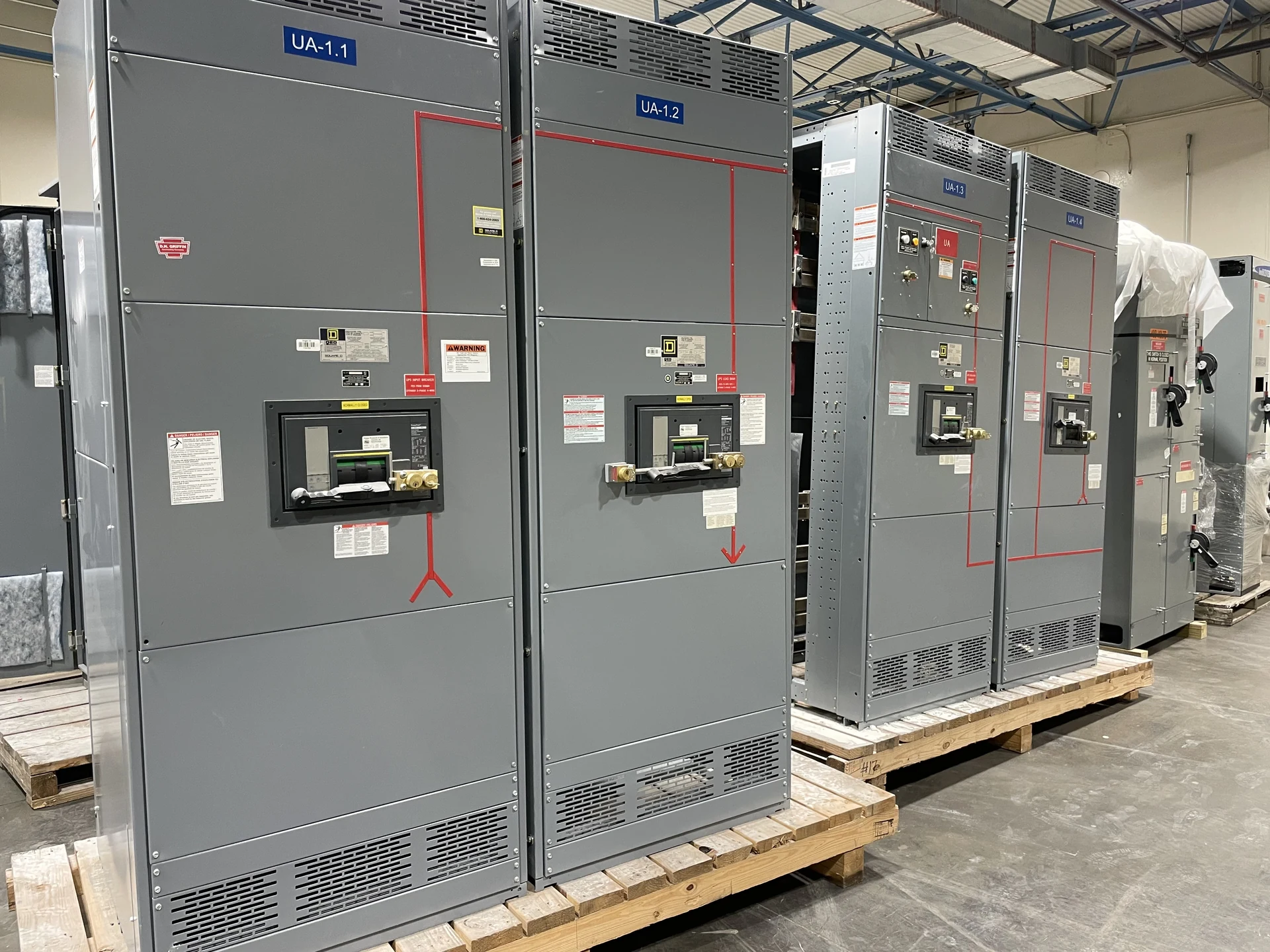
THE MANUFACTURER’S PERSPECTIVE — 02
A 2,500-ampere designation describes a proposed continuous-current class, not the fault current an assembly can withstand or a breaker can interrupt. For a new distribution lineup, the owner, engineer, contractor and manufacturer need to resolve those separate questions together. Actual equipment availability, bus and device ratings, and suitability for the installation require project-specific engineering confirmation.
Start with the current path, not just the headline rating
Identify the main, any tie, each feeder and their expected loads on the one-line diagram. A 2,500-ampere bus designation does not automatically establish the rating or protective setting of every connected circuit. Compare calculated demand and applicable load requirements with the proposed assembly, devices and connections; consider ambient conditions, altitude and enclosure heat using documented equipment ratings.
Give the manufacturer a load schedule that distinguishes present demand from planned additions, together with source configuration and operating modes. For example, a tie might carry load transferred from another section during a maintenance outage. That possibility affects its duty and protection, even if the tie carries little current in the normal arrangement.
Calculate fault duty at the right locations
The electrical engineer needs available short-circuit information at the proposed connection and at relevant buses and devices. Request utility source data, including available fault contribution and applicable X/R information, and identify transformer impedance, conductor lengths, motor contributions and alternate sources. Maximum and minimum fault scenarios can differ substantially, especially when a generator is supplying the system.
The maximum prospective duty helps establish whether equipment can safely tolerate or interrupt faults. Minimum faults matter too: a protective device must detect and clear faults under the applicable conditions. Study each credible source and tie arrangement, and revisit the calculations if utility information, transformer selection or the distribution layout changes.
Separate interruption from assembly withstand
A breaker’s interrupting rating concerns its ability to interrupt fault current under specified conditions; the assembly’s short-circuit rating addresses the complete equipment arrangement. Neither is determined by the 2,500-ampere continuous-current figure. The engineer and manufacturer should evaluate voltage, fault magnitude, test basis and component compatibility against the actual application and applicable equipment standard.
Where short-time withstand is specified, compare both its current and time basis with the protective device’s clearing characteristics. Bus supports, connections and other components must be appropriate for the assembly duty as designed. A series-rated combination is not a generic way to fix an under-rated device: use it only where the specific combination is documented, permitted and suitable for the installation.
Coordinate protection without overlooking tradeoffs
Selective coordination aims to isolate a fault with the protective device nearest it, leaving unaffected feeders energized. The study provider compares manufacturer time-current information and applicable selectivity data across the relevant fault-current range. A delayed main may help a feeder clear first, but a longer clearing time can increase equipment stress and potential arc-flash incident energy.
Instantaneous functions, feeder characteristics and changing source strength may limit coordination; a device setting alone does not guarantee it. Include ground-fault sensing and protection where required or specified, and define the neutral and sensor interfaces. The engineer should resolve coordination, equipment duty and arc-flash objectives together rather than treating one outcome as proof of the others.
Make the protection review part of the purchase
When requesting a quotation from a direct manufacturer of new assemblies, provide the one-line, fault study or available source data, required devices and protection functions, and any preliminary coordination criteria. State whether relays, current transformers, control power, metering and remote trip or alarm interfaces are in the equipment scope. Identify who supplies the study and final settings.
Ask for a proposal identifying assembly and device ratings, assumed source conditions, standards, exceptions and documentation. Submittals should show the device schedule, control interfaces, equipment layout and protective-device data needed for the study. For an appropriate switchboard, verify whether the specific proposed assembly and configuration have the required UL 891 listing; do not assume that standard covers every type of switchgear.
Connect approvals, testing and energization
Build the schedule around utility data, engineering studies, submittal review and acceptance of device selections before procurement commitments. A change in available fault current or a protective-device substitution can trigger a new duty or coordination review. Assign owners for resolving comments and documenting changes so a drawing approval does not leave settings or interfaces undecided.
Specify factory checks and records appropriate to the project, and distinguish them from site acceptance and commissioning. The responsible engineer approves study results and settings; qualified personnel perform installation, testing and energization under the site’s safety procedures. Turnover should include approved drawings, device information, test records, final settings and identified limitations for future changes.
LET'S BUILD SOMETHING RELIABLE — 03
Ready to talk
switchgear?
Tell us about the new equipment your project needs. Include as much or as little detail as you have today.
(951) 403-5738CALL TO DISCUSS YOUR PROJECT