
BUILT IN THE USA. READY FOR YOUR PROJECT.
Service Entrance Switchgear: Protection and Coordination
A service entrance assembly sits at the boundary between a utility supply and a facility’s distribution system.
DIRECT FROM THE MANUFACTURER / NEW EQUIPMENT
THE MANUFACTURER’S PERSPECTIVE — 02
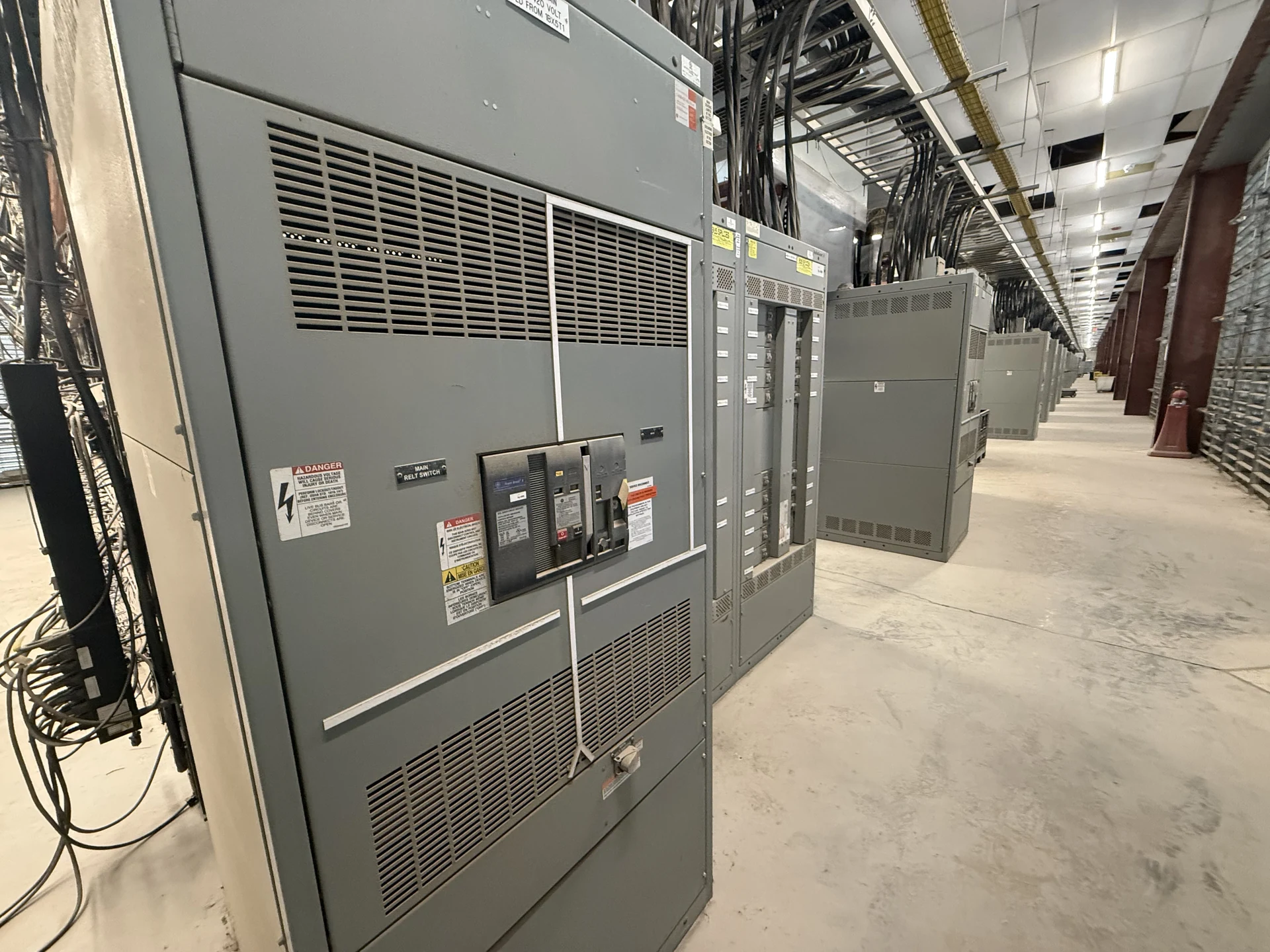
A service entrance assembly sits at the boundary between a utility supply and a facility’s distribution system. Its protective devices must handle the fault duty at that location while working with upstream utility protection and downstream feeders. For owners, engineers and contractors, a useful purchase starts with the service design and protection objectives—not simply the requested main-device ampacity.
Establish fault duty at the service bus
Ask the utility for available maximum and minimum fault information at the service point, together with source assumptions, transformer data, X/R ratio and any known planned changes. The project engineer can then evaluate fault current at the actual equipment terminals, accounting for the service conductors and any contribution from motors or on-site generation.
Maximum fault current helps establish equipment duty; minimum fault current helps determine whether protection will respond as intended. Different operating states, such as an alternate source or a changed utility supply, can produce different results. Provide the engineer with a current one-line and identify credible present and future configurations.
Distinguish device interruption from assembly withstand
A main breaker or fused switch is only one part of the fault-duty decision. Its voltage and interrupting ratings must suit the application, while the complete assembly, bus and other components must have appropriate short-circuit ratings for the available duty. Continuous current rating alone does not establish fault capability.
Where a protective device has an intentional delay, the engineer should also check any applicable short-time withstand rating and its duration. A proposed series-rated or current-limiting combination requires verification of its specific tested and listed conditions; it should not be assumed to work with arbitrary devices or system configurations.
Coordinate across the utility boundary
The utility may own the upstream transformer, fuse, recloser or other protective equipment, while the customer owns the service disconnect and feeders. Request the utility’s service requirements, metering arrangement and available protection characteristics early. Confirm who can approve equipment interfaces and whether protective-device information can be shared for the study.
The coordination engineer compares device time-current characteristics over the relevant fault range, including instantaneous regions where curves can overlap. Full selectivity with the utility device is not automatic: utility practices and upstream settings may limit the available choices. Document any remaining overlap and the loads that could be interrupted.
Choose protection around operating priorities
Electronic-trip breakers can offer adjustable functions, while fused switches use fuse characteristics that depend on the selected type. Compare the actual curves, available settings, interrupting duty and future replacement requirements—not just the equipment’s initial footprint. The coordination study should evaluate the main device against each significant downstream protective device.
Delaying an upstream trip may improve coordination with a feeder, but it can also increase incident energy during some faults. Faster clearing can reduce exposure yet cause a wider outage. A qualified engineer should evaluate these competing objectives with the owner, including any required selective coordination and applicable arc-energy reduction provisions.
Resolve ground-fault and control interfaces
Ground-fault protection requirements depend on the service characteristics, applicable code and project design. When specified or required, define the sensing arrangement, neutral and grounding connections, trip action and coordination with downstream ground-fault devices. An incomplete neutral or sensor interface can undermine the intended protection even when the main device is correctly selected.
For relay-based protection, identify instrument-transformer ratios and accuracy, control and trip power, alarms, and the division of responsibility for settings. Coordinate utility-sealed metering compartments separately from customer protective functions. Specify the applicable assembly standard and verify any required listing for the particular proposed construction.
Purchase against an agreed study and schedule
Give the direct manufacturer the one-line, load and feeder schedule, available fault data, utility requirements, protection specifications and desired delivery milestones. Request a proposal that identifies devices and ratings, assumptions, exclusions, drawings, test documentation and any coordination support. Confirm who supplies the independent study and who approves its final settings.
Allow time for utility information, submittal review, device procurement and resolution of study findings before fabrication decisions become fixed. At turnover, obtain approved drawings, device data, settings and relevant factory records. Qualified personnel should perform field installation, testing and commissioning under the owner’s safety procedures and local authority requirements.
LET'S BUILD SOMETHING RELIABLE — 03
Ready to talk
switchgear?
Tell us about the new equipment your project needs. Include as much or as little detail as you have today.
(951) 403-5738CALL TO DISCUSS YOUR PROJECT