
BUILT IN THE USA. READY FOR YOUR PROJECT.
Metal-Enclosed Switchgear: Protection and Coordination
Metal-enclosed switchgear can use different switching and protection arrangements, so an enclosure description alone does not establish how a fault will be detected or cleared.
DIRECT FROM THE MANUFACTURER / NEW EQUIPMENT
THE MANUFACTURER’S PERSPECTIVE — 02
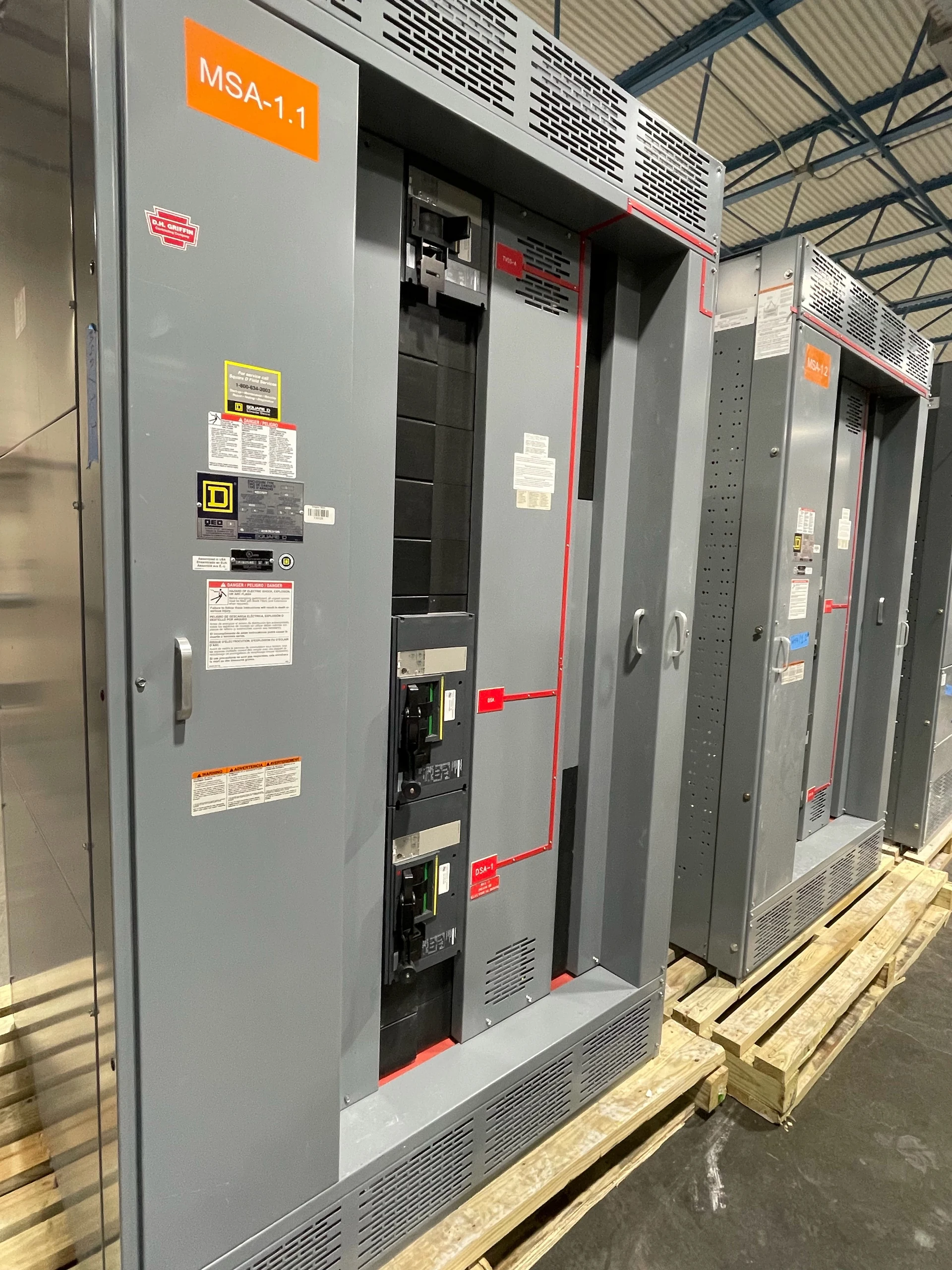
Metal-enclosed switchgear can use different switching and protection arrangements, so an enclosure description alone does not establish how a fault will be detected or cleared. For engineers, contractors and facility owners buying a new lineup, the starting point is the electrical system and its operating modes. A direct manufacturer can then evaluate an assembly around the specified devices, enclosure interfaces and coordination requirements.
Map sources and fault conditions
Provide a current one-line diagram showing incoming sources, transformers, ties, feeders and major loads. Identify system voltage, frequency, grounding method and normal and alternate source configurations. Utility fault information, transformer impedance, generator characteristics and significant motor contributions help the project engineer determine prospective fault duty at the lineup.
Request both maximum and minimum fault scenarios where applicable, including planned future source changes. A high fault level can challenge equipment interrupting and withstand capabilities; a low level can make a protective device less sensitive or slower to respond. Document which source combinations are permitted, rather than assuming that every source operates together.
Match device and assembly duties
Depending on the application and feasible construction, a metal-enclosed lineup may employ fused switches or circuit breakers with protective relays. A switch load-interrupting duty is not the same as a breaker fault-interrupting duty. The engineer must evaluate the selected devices and their combination against the relevant prospective current and switching duties.
Also check the assembly bus and equipment short-circuit withstand, including the associated duration, against the study and clearing times. A fuse, switch, bus and enclosure cannot be judged independently from a catalog headline. Confirm that the proposed device combination, fuse characteristics and ratings are appropriate for the actual engineered assembly.
Use coordination curves to expose compromises
The coordination-study provider compares time-current characteristics of the proposed incoming and feeder protection with upstream utility devices and downstream equipment. Include actual device types, adjustable ranges and fuse data, along with transformer inrush, motor starting and expected load. Curves must address the fault-current range and operating modes, not just one representative point.
Selectivity aims to confine an interruption to the affected circuit, but complete coordination may not be achievable across every condition. Adding delay upstream may improve discrimination while increasing fault duration. Ask the engineer to identify uncoordinated ranges, nuisance-trip risks and decisions requiring owner approval instead of treating curve separation as an automatic guarantee.
Define relay and control interfaces
Where protective relays are specified, provide current-transformer ratios, accuracy, burden and saturation considerations for the expected fault conditions. Voltage inputs and directional functions may be needed for particular source arrangements. The study provider and manufacturer should agree on sensing locations, relay functions and the information needed to finalize device selections.
Identify the trip circuit, auxiliary control supply, breaker or switch interface, status contacts and alarms. If a separate battery or control-power system is involved, clarify its ownership and what indications are required on loss of supply. Communications point lists and remote indications should be coordinated with the facility controls team.
Balance continuity and electrical safety
Longer clearing times can affect arc-flash incident energy as well as equipment withstand. A qualified study provider should evaluate the actual system configurations and proposed protection settings; selective coordination alone does not establish a safe working condition. Faster protection or other mitigation features may be considered when technically feasible, with effects on continuity reviewed.
Plan access, isolation provisions and interlocks around the chosen device arrangement and maintenance philosophy. Do not assume that an enclosure provides every separation or access feature associated with metal-clad construction. Qualified personnel must plan and perform electrical work under applicable site procedures, codes and manufacturer instructions.
Turn the study into a purchase package
Request a proposal against the one-line, fault-duty data, applicable standards, installation environment and desired protection functions. Ask for drawings, device schedules, ratings, control schematics and explicit exceptions. Confirm who supplies the coordination and arc-flash studies, final relay settings, field wiring, commissioning and any required utility approvals.
Agree on project-specific factory inspection and functional-test scope, acceptance criteria and records before release. Allow time for source-data collection, drawing review, device availability and resolution of study comments; changes after approval can affect fabrication and the installation sequence. Coordinate planned outage windows with the owner and contractor, without assuming a delivery date.
LET'S BUILD SOMETHING RELIABLE — 03
Ready to talk
switchgear?
Tell us about the new equipment your project needs. Include as much or as little detail as you have today.
(951) 403-5738CALL TO DISCUSS YOUR PROJECT