
BUILT IN THE USA. READY FOR YOUR PROJECT.
Metal-Enclosed Switchgear: Enclosure and Environment
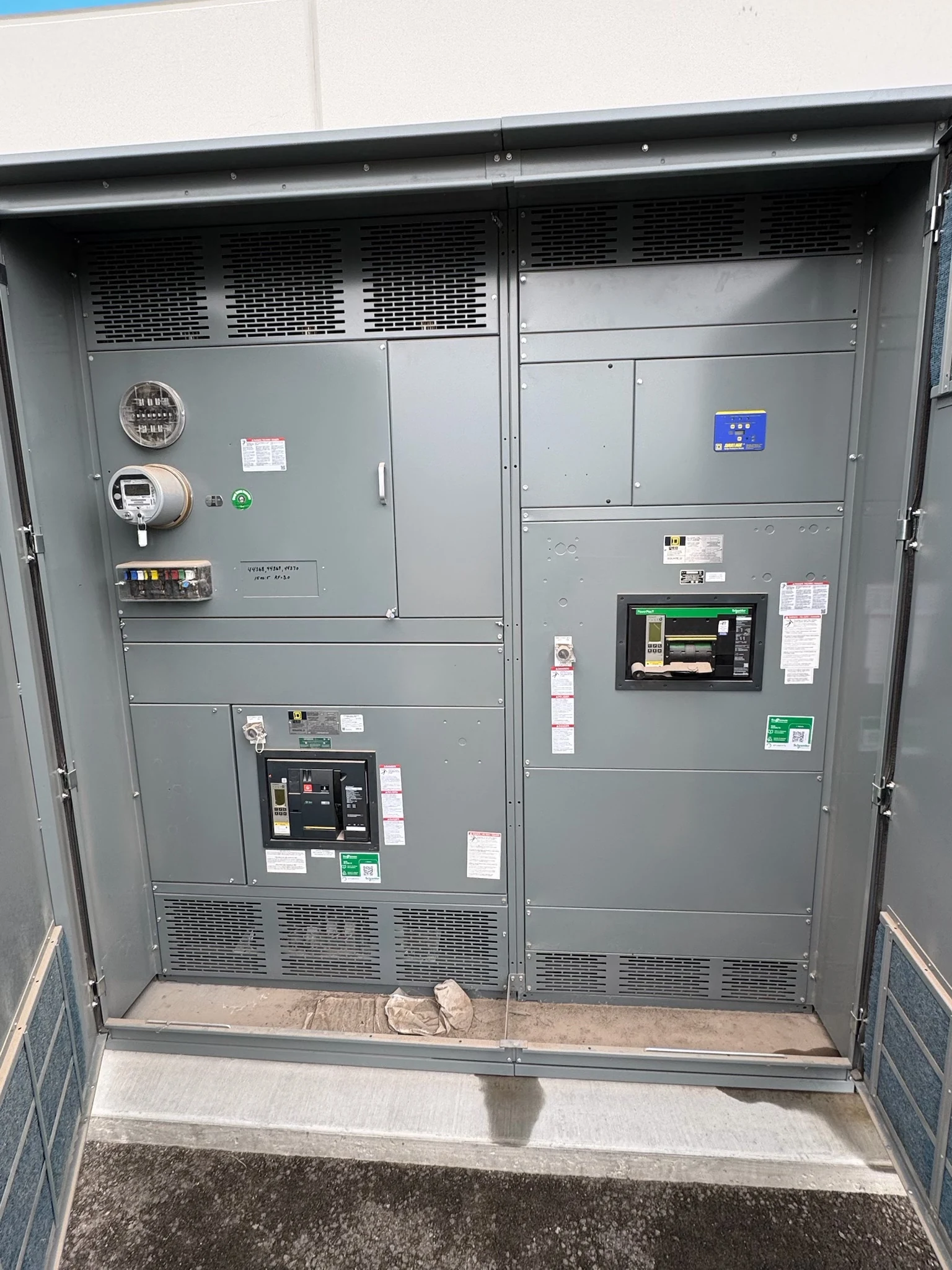
The enclosure around metal-enclosed switchgear is part of the electrical design, not simply a weather cover.
DIRECT FROM THE MANUFACTURER / NEW EQUIPMENT
THE MANUFACTURER’S PERSPECTIVE — 02
The enclosure around metal-enclosed switchgear is part of the electrical design, not simply a weather cover. Its access points, internal clearances and heat management must suit the actual switching devices and installation. Owners, engineers and contractors should describe the operating environment early so a direct manufacturer can develop a new assembly that fits both the system and the site.
Start with the installation environment
Identify whether the lineup will be inside a conditioned electrical room, in an unconditioned building or outdoors. Provide expected ambient temperature ranges, altitude, humidity, dust, solar exposure and any chemicals or salt-laden air. Include site drainage and flood elevation information when relevant; an outdoor designation alone does not describe these stresses.
For a dusty outdoor yard, a weather-protective enclosure and a filtered ventilation arrangement might be considered together. In a clean indoor room, simpler construction may be appropriate. Specify the required enclosure type and applicable standard with the engineer, then confirm that the complete proposed construction, including openings and accessories, meets the project requirements.
Balance heat removal against ingress protection
Switching devices, bus connections and other components produce heat. Ask for estimated equipment heat rejection and allowable ambient conditions so the mechanical designer can evaluate room ventilation or outdoor exposure. Higher ambient temperatures, restricted airflow and solar gain can affect usable ratings; any adjustment must follow the engineered assembly and component information.
Ventilation openings can improve cooling but also introduce paths for dust or moisture. Filters need a defined inspection and replacement plan, while fans introduce power and maintenance dependencies. Agree on alarm, failure response and access provisions where applicable. Do not assume an enclosure remains suitable for its intended exposure after field modifications.
Match access to the switching arrangement
Metal-enclosed construction can incorporate different project-specific switches, fuses or circuit breakers; it should not be assumed to have the same compartmentation as metal-clad equipment. Request drawings showing access doors, barriers, device positions and any key or electrical interlocks. State whether access is needed for cable terminations, instrument transformers, controls or device maintenance.
Front-only access can help with a constrained room layout, but it must be confirmed for the proposed equipment and its field connections. Rear or side access may require additional building space. An enclosure type or metal barrier alone does not establish an arc-resistant rating; request evidence and defined accessibility conditions if that performance is specified.
Plan for moisture and corrosion
Condensation can occur even when rain is excluded, particularly as enclosure temperature changes. Discuss space heaters, auxiliary supply, controls and monitoring when the environment warrants them. These features add wiring and ongoing power requirements, and their suitability depends on the enclosure design and expected conditions rather than a universal remedy.
Describe corrosive gases, washdown exposure or coastal atmosphere instead of requesting a generic heavy-duty finish. Review enclosure material, coating system, hardware, seals and exposed interfaces against those conditions. Ask what inspection and finish-maintenance information will be supplied, and confirm that the specified protection is compatible with the chosen construction.
Coordinate entries, foundation and working space
Provide cable entry direction, conductor quantities and sizes, termination details and available routing space. The enclosure layout must accommodate the actual terminations without defeating barriers or environmental protection. Coordinate openings and sealing responsibilities before release; late changes can affect fabrication, drawings and the intended enclosure performance.
For outdoor equipment, align foundation dimensions, anchor locations, drainage, lifting access and finished grade with civil and structural designers. Indoors, check the delivery path, door swing, working clearances and ventilation space against applicable requirements. The installer needs approved equipment dimensions and shipping splits, not just a preliminary footprint.
Turn the requirements into a purchase package
Send the manufacturer the one-line diagram, switching-device preferences, system and fault-duty information, site conditions, room or pad layout and required standards. Request a proposal identifying enclosure type, materials, cooling and heating provisions, access arrangement, electrical ratings and any exceptions. Ratings, construction and any listing must be verified for the specific assembly.
Before fabrication release, review elevations, entry locations, weights, anchorage details, heat data and the responsibilities for field sealing and auxiliary power. Agree on inspection records, operating information and final drawings. Allow schedule time for engineering review, equipment procurement and revisions. Installation, testing and electrical work belong to qualified personnel following site procedures and applicable requirements.
LET'S BUILD SOMETHING RELIABLE — 03
Ready to talk
switchgear?
Tell us about the new equipment your project needs. Include as much or as little detail as you have today.
(951) 403-5738CALL TO DISCUSS YOUR PROJECT