
BUILT IN THE USA. READY FOR YOUR PROJECT.
Metal-Clad Switchgear: Enclosure and Environment
A metal-clad switchgear enclosure does more than cover medium-voltage equipment.
DIRECT FROM THE MANUFACTURER / NEW EQUIPMENT
THE MANUFACTURER’S PERSPECTIVE — 02
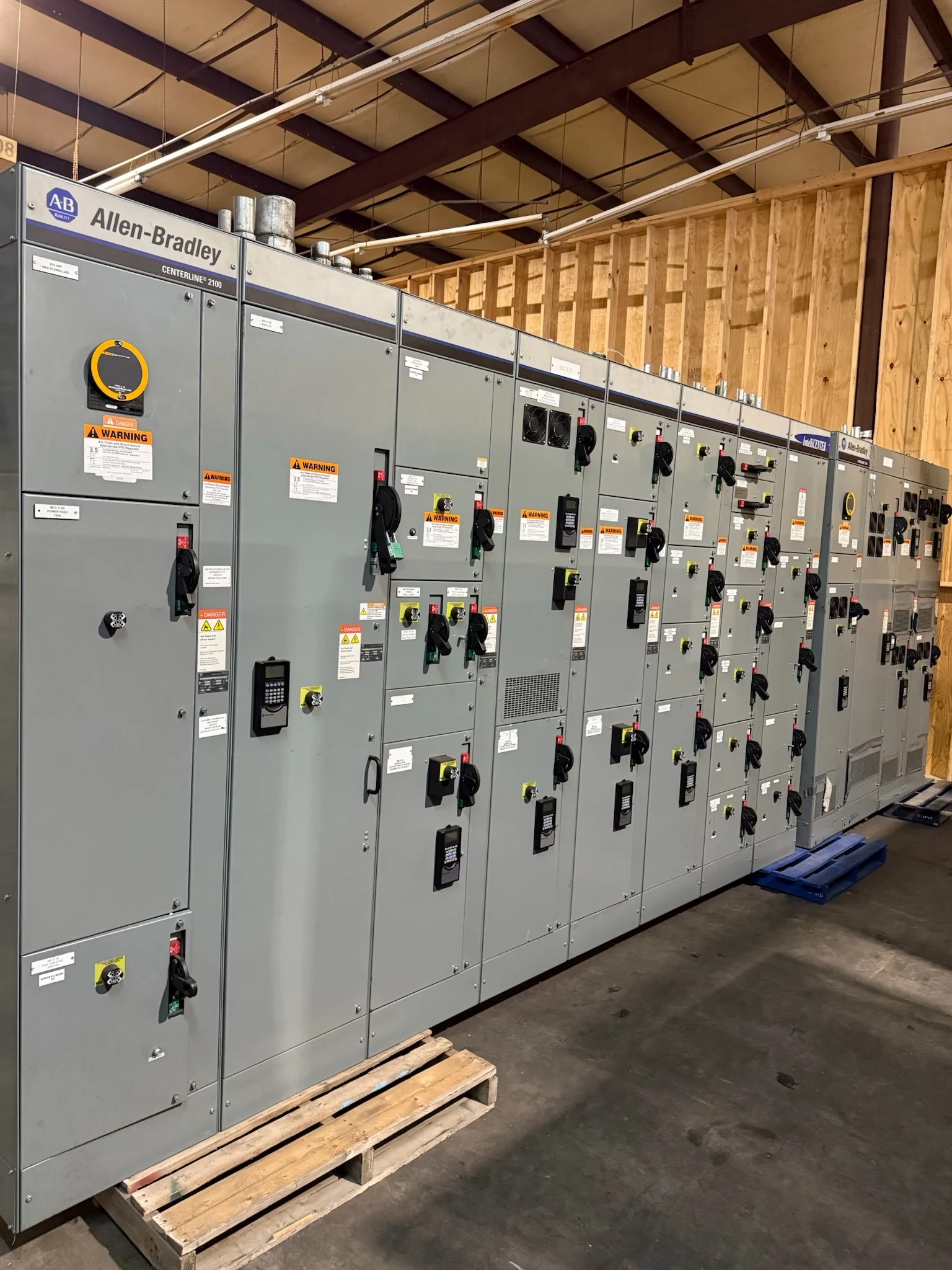
A metal-clad switchgear enclosure does more than cover medium-voltage equipment. Its compartments, access points and ventilation must suit the electrical design and the place where the lineup will operate. Owners, engineers and contractors can avoid expensive layout changes by describing the environment and maintenance needs before a new assembly is quoted.
Choose the setting before the shell
An indoor lineup relies on the electrical room to limit exposure. Provide the room plan, expected temperature range, ventilation arrangements and any nearby sources of dust or moisture. A room that is nominally indoors may still experience hot air from transformers, a leaking roof or contaminated process air.
Outdoor construction transfers more protection to the enclosure. Compare non-walk-in and sheltered-aisle arrangements for the required work and available footprint. A sheltered aisle may improve weather protection for access, but adds structure, foundation area and coordination. Confirm the arrangement is feasible for the specific assembly rather than assuming every configuration is offered.
Plan for compartment and breaker access
Metal-clad construction uses separate metal-enclosed compartments for major power components. Ask the manufacturer which doors or removable covers serve breakers, bus, cable terminations and low-voltage controls. Compartmentation supports an organized design; it does not establish that adjacent circuits are safe to touch or eliminate the need for an approved safety plan.
Show front and rear working space, door swings, ceiling height and the path for moving a drawout breaker where that design is proposed. Include its handling device and any obstructions. The engineer and installer must check applicable clearances and manufacturer instructions for the actual layout; a footprint alone does not establish usable access.
Balance heat removal and moisture control
Bus, breakers and other components release heat during operation. Give the design team the expected load, ambient temperature, altitude and nearby heat sources. Obtain the assembly heat-loss information and permitted operating conditions for the proposed design so the mechanical engineer can assess room cooling or outdoor ventilation without blocking the equipment airflow path.
Humidity and temperature swings can cause condensation even when rain cannot enter. Discuss whether enclosure heaters, a control scheme or other moisture management is appropriate, and identify the source and monitoring of auxiliary power. Filters and louvers can limit contamination, but they also affect airflow and create inspection responsibilities; verify their compatibility with the assembled equipment.
Describe actual site exposure
Specify wind-driven rain, dust, salt exposure, washdown, chemicals and flood risk where relevant. An outdoor enclosure designation should be verified against the proposed assembly and exposure, not treated as a promise of protection from every hazard. For example, rain protection alone does not establish suitability for windblown dust or hose-directed water.
Ask about finish systems, hardware and maintenance where corrosion is a concern. Coordinate the foundation elevation, site drainage, roof overhangs and cable-entry seals with the civil and electrical designers. Sun exposure may add heat; equipment ambient limits and any needed design adjustments should be confirmed for the proposed installation.
Coordinate penetrations and arc requirements
Cable entry location affects termination space, enclosure openings and exposure to water or contaminants. Share conductor counts and sizes, entry direction and routing constraints, and identify who provides and seals the field penetrations. If the lineup ships in sections, agree on joint protection and field assembly responsibilities so the installed enclosure matches the approved design.
Metal-clad does not automatically mean arc-resistant. If the specification requires arc-resistant construction, identify the required accessibility, applicable test basis and project conditions. Verify any exhaust plenum or discharge path, ceiling space and structural interfaces with the manufacturer and building designers. Such features are project-specific and must not be presumed available.
Put enclosure decisions into the purchase package
Send the direct manufacturer a one-line diagram, system and fault-duty data, site plan, environmental conditions and desired access arrangement. Request drawings showing elevations, ventilation openings, clearances, weights, anchorage and cable interfaces, along with proposed enclosure requirements and documented exceptions. Confirm applicable equipment standards and any project-specific certification or listing with the manufacturer.
Schedule drawing review before foundations, room ventilation and openings are finalized. Agree who supplies auxiliary power, field sealing, installation and acceptance documentation, and track changes that affect dimensions or delivery planning. Qualified electrical personnel must perform installation, inspection and commissioning under the site safety program and the approved equipment instructions.
LET'S BUILD SOMETHING RELIABLE — 03
Ready to talk
switchgear?
Tell us about the new equipment your project needs. Include as much or as little detail as you have today.
(951) 403-5738CALL TO DISCUSS YOUR PROJECT