
BUILT IN THE USA. READY FOR YOUR PROJECT.
High-Voltage Switchgear: Enclosure and Environment
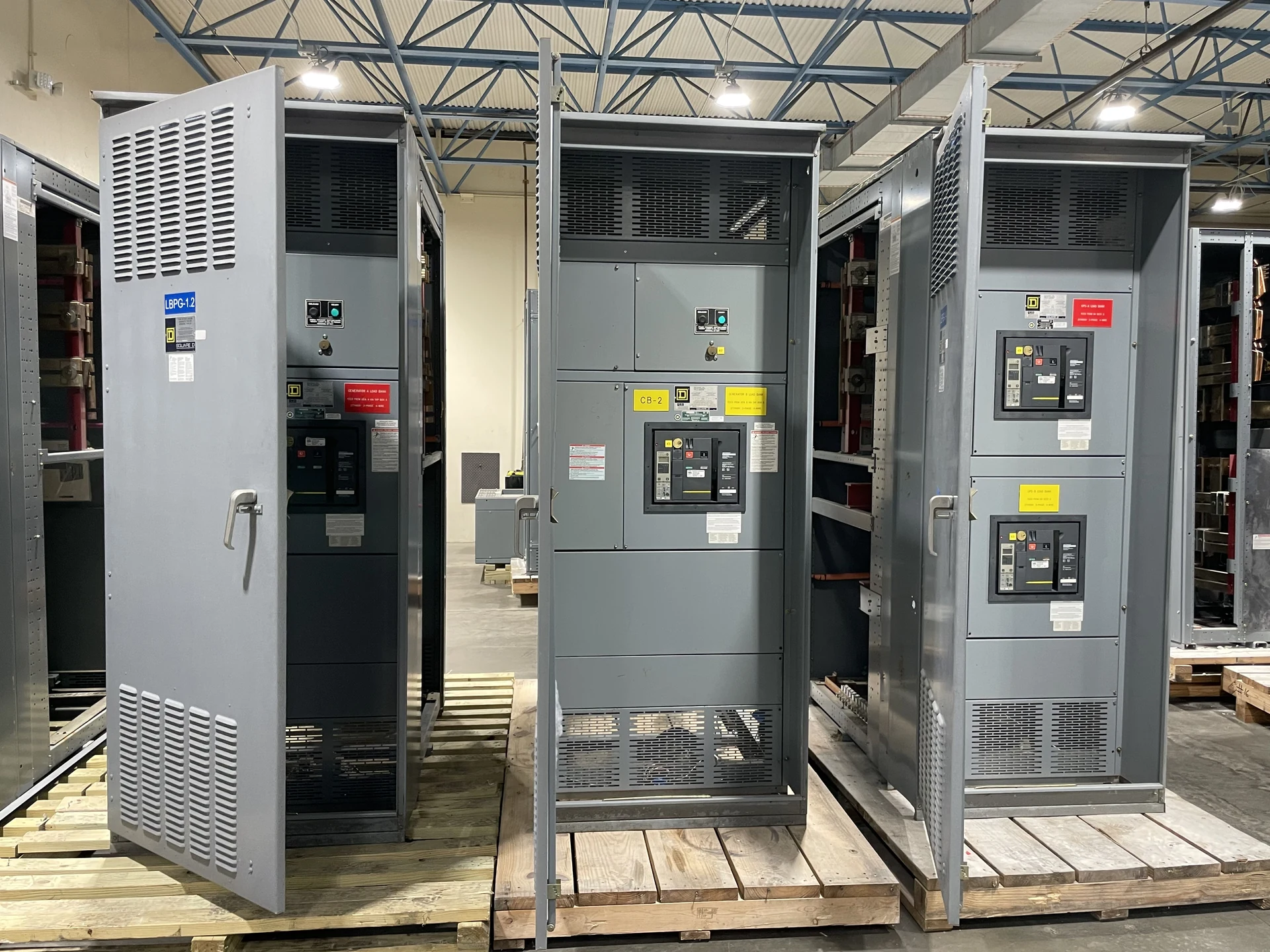
A high-voltage switchgear enclosure is part of the electrical design, not simply a cover around switching devices.
DIRECT FROM THE MANUFACTURER / NEW EQUIPMENT
THE MANUFACTURER’S PERSPECTIVE — 02
A high-voltage switchgear enclosure is part of the electrical design, not simply a cover around switching devices. Exposure, insulation, heat removal and access all influence whether an arrangement can be engineered for a particular project. Owners, electrical engineers and contractors should define the site conditions and switching requirements together before requesting a new assembly; feasibility and equipment availability require project-specific review.
Start with the environment and electrical duty
Identify the installation as indoors, outdoors or within a dedicated shelter, and describe the actual exposure rather than relying on a generic enclosure label. Provide ambient temperature ranges, altitude, humidity, wind-driven rain, flooding potential, dust, salt, chemical vapors and sun exposure where relevant. An enclosure appropriate for a dry electrical room may not suit an exposed industrial yard.
The engineer also needs the system voltage and insulation requirements, continuous current, available fault duty, switching scheme and applicable project standards. Clarify what the project means by high voltage: terminology and equipment classifications vary. These inputs help determine the applicable construction and whether the proposed switching and protection scope is feasible before enclosure details are fixed.
Balance insulation space against the footprint
Insulation design influences the space needed around energized parts and at cable or overhead connections. For an air-insulated arrangement, contamination, humidity and altitude can affect insulation considerations; the equipment design must account for the specified conditions. Ask the engineering team to confirm clearances, insulation coordination and interfaces instead of assuming a compact enclosure can fit any voltage class.
Alternative insulation technologies may change the footprint and the service interfaces, but availability and suitability must be confirmed for the project. Compare the complete installation, including termination space, access, monitoring and any special handling obligations, not just the cabinet dimensions. A smaller enclosure can shift costs and complexity to the surrounding civil work or maintenance plan.
Manage heat, moisture and corrosion together
The enclosure must accommodate losses from the specified equipment while keeping components within their verified operating conditions. Ventilation can help reject heat but may introduce dust or moisture; more enclosed construction can reduce exposure while making heat removal harder. Provide expected loading, ambient conditions and any room ventilation limitations so the design can be evaluated as a system.
Temperature swings and humidity can cause condensation even when direct rain is excluded. Discuss whether project-specific heaters, controls, alarms, drainage or filtered ventilation are appropriate, and identify who supplies their auxiliary power. Materials, finishes, seals and fasteners should be selected for the stated corrosion exposure and the owner’s inspection and maintenance expectations.
Define access and pressure-management requirements
Draw the intended locations of doors, removable panels, cable compartments and operator interfaces. The project engineer and authority having jurisdiction must establish applicable working clearances and access routes for the actual equipment and voltage. Door swing, adjacent walls, lifting paths and space for test equipment can make an otherwise acceptable footprint impractical.
If an internal-arc performance requirement applies, specify the required standard, classification and accessibility criteria for review. Pressure-relief features and discharge paths must be engineered as part of the applicable assembly and site design, not assumed from an enclosure description. Qualified personnel should perform electrical work under site procedures and manufacturer instructions; an enclosure alone does not make energized work safe.
Coordinate the enclosure with site interfaces
Share foundation elevations, anchor requirements, expected structural loads and cable-entry locations with the civil and electrical designers. Identify conductor quantity and type, termination responsibilities, grounding connections, control wiring and communication interfaces. For outdoor equipment, consider surface drainage and how water or debris could reach openings without treating a foundation detail as a substitute for an appropriate enclosure.
Delivery planning matters as much as the installed outline. Confirm the travel route, lifting limitations, allowable shipping sections and field-assembly responsibilities. If a shelter, transformer or other equipment connects to the lineup, request interface drawings showing dimensions and tolerances; coordination early in design can prevent mismatched openings and late field changes.
Purchase against a documented scope
Provide the one-line diagram, environmental data, site layout, operating philosophy and required documentation to the direct American manufacturer serving San Antonio, South Texas and projects nationwide. Ask for a feasibility review, enclosure description, outline and interface drawings, equipment ratings, applicable standard and any project-specific listing or testing evidence. Separate confirmed commitments from proposed features and exceptions.
Compare quotations on environmental protection, thermal assumptions, access, auxiliary systems, inspection scope and field work rather than enclosure size alone. Set review milestones for drawings and utility or owner approvals, then coordinate material procurement, fabrication, testing and delivery with the installation schedule. Availability and timing depend on the final design and component sourcing; no delivery date should be assumed until confirmed.
LET'S BUILD SOMETHING RELIABLE — 03
Ready to talk
switchgear?
Tell us about the new equipment your project needs. Include as much or as little detail as you have today.
(951) 403-5738CALL TO DISCUSS YOUR PROJECT