
BUILT IN THE USA. READY FOR YOUR PROJECT.
Medium-Voltage Switchgear: Enclosure and Environment
A medium-voltage switchgear enclosure is more than a weather cover.
DIRECT FROM THE MANUFACTURER / NEW EQUIPMENT
THE MANUFACTURER’S PERSPECTIVE — 02
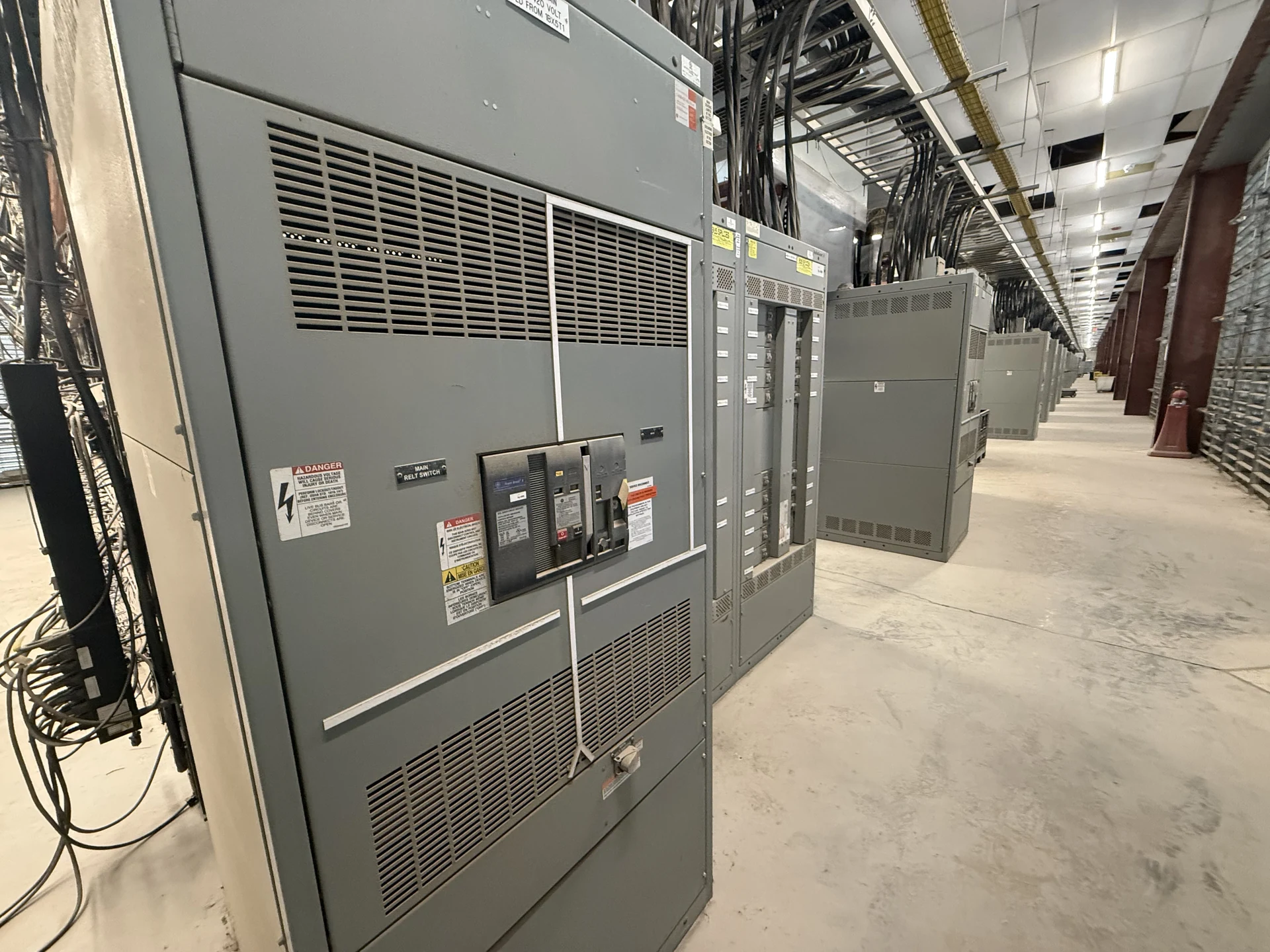
A medium-voltage switchgear enclosure is more than a weather cover. It shapes how switching and protective equipment manages heat, stays clean, connects to incoming cables and can be accessed by qualified personnel. For owners, engineers and contractors, the right purchase starts with the actual installation environment and the selected equipment construction, not an enclosure label alone.
Describe the site before selecting the enclosure
Identify whether the lineup will be indoors, outdoors or inside a sheltered structure, and provide a site plan and equipment-room elevations. Record ambient temperature ranges, humidity, altitude, sunlight, wind-driven rain, dust and chemical exposure. Near the coast, salt-bearing air can matter even when the enclosure is not directly exposed to rain.
Distinguish occasional exposure from conditions expected throughout the equipment’s life. A washdown area, process exhaust or flood-prone site may require different materials, placement or protective measures. Give the manufacturer the project’s environmental criteria and applicable owner requirements so engineering can assess the complete assembly, rather than guessing from a generic location.
Match protection and construction to the equipment
Metal-clad and metal-enclosed designs have different construction and compartmentation requirements; do not assume the terms are interchangeable. State the switching devices, protection scheme and required equipment standard, then confirm that the proposed construction accommodates them. Insulation, barriers and clearances must be suitable for the equipment and conditions, including anticipated contamination.
Specify an enclosure type or ingress-protection requirement appropriate to the exposure, and ask what it covers. A degree of protection against dust or water does not by itself establish fault performance or prove suitability for every chemical atmosphere. For an arc-resistant design, identify the required standard, accessibility and tested configuration; review exhaust paths and operating restrictions in the manufacturer’s documentation.
Coordinate heat removal with environmental protection
Switching devices, bus connections and auxiliary equipment release heat inside the enclosure. Ask for expected heat rejection and permitted ambient conditions at the specified load, then have the mechanical engineer check room ventilation or outdoor solar exposure. The acceptable current rating depends on the complete design and its stated operating conditions, not just a device nameplate.
Vent openings can simplify heat removal but create an exposure path; filtered or forced ventilation adds maintenance and may require fan monitoring. A closed-loop cooling arrangement may be preferable in a contaminated space, if compatible with the design. Compare equipment footprint, auxiliary power, filter access and the consequences of a cooling failure before committing.
Address moisture and corrosion together
Temperature swings can produce condensation on insulating surfaces even inside a sheltered enclosure. Discuss space heaters, humidity-control provisions and their power supply, controls and alarms where appropriate. Define who supplies and monitors auxiliary power, including during outages, and how the owner will maintain the required environment during storage and after installation.
For corrosive atmospheres, document the chemicals and concentration information available rather than requesting an unspecified corrosion-resistant finish. Compare enclosure material, coating system, hardware and penetrations with the actual exposure. Drainage and foundation elevations also need civil coordination; neither a protective finish nor a heater substitutes for keeping standing water away from the equipment.
Reserve space for access and cable interfaces
Provide the proposed cable entry direction, conductor quantities and sizes, termination type and available cable-routing space. Medium-voltage terminations and stress-control components can occupy substantial volume, so the cable compartment and bend space need to be coordinated with the selected cable and termination suppliers. Confirm where grounding connections and field sealing are assigned.
Review equipment elevations and floor plans for door swing, removable covers, lifting routes and any drawout or service equipment access. The engineer of record and authority having jurisdiction determine applicable working clearances and egress requirements. Where an arc-resistant exhaust system is specified, include its plenum and discharge route in the building coordination, not just the lineup footprint.
Make enclosure scope visible in the purchase
A useful quote package includes the one-line, electrical duties, site conditions, layout, required standards and desired tests. Ask for drawings showing dimensions, ventilation, cable entry, access zones, anchorage loads and auxiliary power interfaces. Compare exceptions alongside price: an omitted heater circuit, exhaust duct or field seal can move work and risk to another contractor.
Agree on review milestones, component availability checks, shipping splits and responsibility for installation, inspection and commissioning. Changes to the room or exposure criteria after drawing approval can affect engineering and schedule. For projects in San Antonio, South Texas and nationwide, a direct American manufacturer can evaluate a new assembly against these inputs; qualified personnel must perform electrical work under the project’s safety procedures.
LET'S BUILD SOMETHING RELIABLE — 03
Ready to talk
switchgear?
Tell us about the new equipment your project needs. Include as much or as little detail as you have today.
(951) 403-5738CALL TO DISCUSS YOUR PROJECT