
BUILT IN THE USA. READY FOR YOUR PROJECT.
Metal-Enclosed Switchgear: Installation and Access
Installing metal-enclosed switchgear begins long before the lineup reaches the site.
DIRECT FROM THE MANUFACTURER / NEW EQUIPMENT
THE MANUFACTURER’S PERSPECTIVE — 02
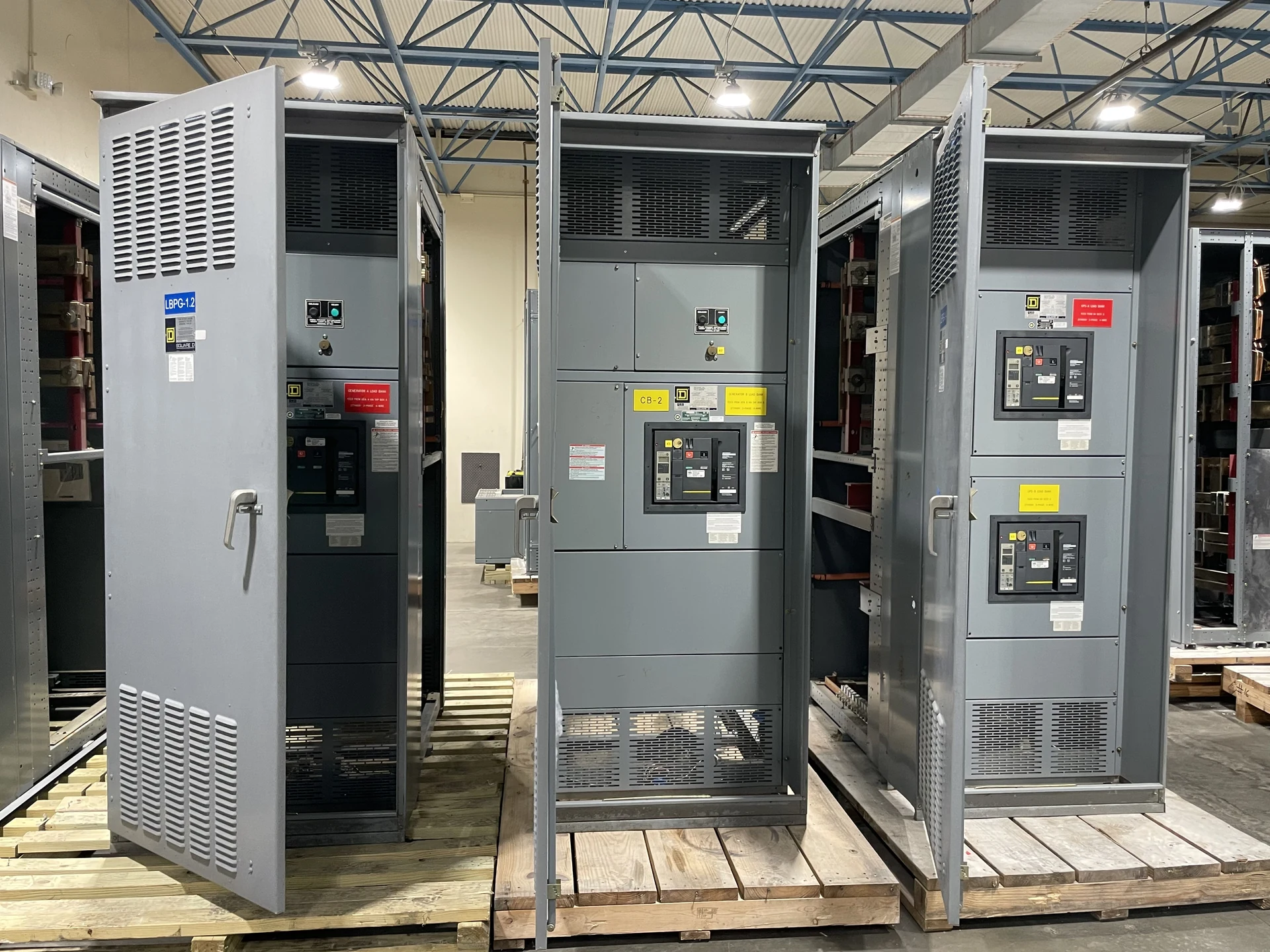
Installing metal-enclosed switchgear begins long before the lineup reaches the site. The enclosure, switching devices and cable interfaces must fit both the power system and the space available for delivery, installation and future access. Owners, engineers and contractors can reduce late changes by agreeing on these interfaces with the manufacturer while the equipment design is still being developed.
Start with the equipment and access envelope
Provide the manufacturer with the one-line diagram, device arrangement, system characteristics and available fault-current information. Identify the intended switches, fuses or other devices, along with required operating and maintenance access. A metal enclosure does not by itself establish compartmentation or make an assembly equivalent to metal-clad switchgear; the selected construction must be reviewed against the specification.
On the room plan, show the lineup footprint, equipment height, door swings and required access faces. Also allow for the actual movement of removable devices or inspection covers where applicable. The design team and authority having jurisdiction should determine working space and access requirements from the applicable code, equipment instructions and site conditions rather than relying on a generic clearance.
Plan receiving and the route into position
Measure the route from the unloading area to the final location, including gates, doors, corridors, turns, floor loading and any elevation changes. Ask for preliminary shipping dimensions, weights, center-of-gravity information and lifting provisions. A lineup that fits in the room may still require shipping splits if a complete assembly cannot pass through the building.
Splits can make transport practical but introduce field alignment, inter-section connections and additional inspection. Establish who unloads, stores, moves and joins the sections, and request the applicable handling and assembly documentation. The rigging contractor should plan the move around the final manufacturer information; delivery packaging and temporary storage need protection from moisture and physical damage.
Resolve cable entry before fabrication
Specify whether each power and control circuit enters from above or below, then identify conductor sizes, quantities, insulation and proposed termination types. Coordinate conduit or cable-tray locations with the equipment drawings. Conductor bending space and room for terminations can affect section depth and width, so a convenient route outside the enclosure may not be workable inside it.
Review phase arrangement, grounding connections and any neutral requirements with the engineer. For a transformer, utility or adjacent assembly interface, document connection elevations, ownership of mating hardware and support responsibilities. Separate control and communications pathways where required by the design, and assign responsibility for field wiring, labeling and verification at each interface.
Coordinate the foundation and environment
The structural and civil teams need equipment weights, load distribution, anchor locations and any project-specific seismic criteria. Compare foundation elevations and tolerances with cable trenches, conduits and drainage before approving the layout. Assign responsibility for anchorage design and field measurements; the equipment manufacturer and structural designer should resolve discrepancies before concrete or steelwork is committed.
For an indoor room, account for equipment heat, ventilation, ambient conditions and moisture exposure. For outdoor placement, discuss the enclosure rating, corrosion exposure, water management and weather-protected access appropriate to the site. Heaters or ventilation features may change auxiliary power needs and maintenance access, so include them in the electrical and mechanical coordination.
Match device access to the safety plan
Access requirements depend on the selected switching devices, barriers and interlocks. For example, a fused-switch section may need a different service envelope from a section containing a circuit breaker. Compare the manufacturer’s proposed arrangement with the owner’s maintenance expectations, including component removal, inspection access and the practical consequences of placing equipment against a wall.
Installation, testing and any work around electrical equipment belong to qualified personnel under the site’s safety procedures, applicable codes and manufacturer instructions. Identify other power sources and control supplies in project documents, and coordinate isolation and outage planning with the owner. A drawing showing a door or interlock is not a substitute for a site-specific safety assessment.
Buy the interfaces and schedule together
A useful request for quotation includes the one-line, equipment and fault-duty requirements, room or site plan, entry preferences, access constraints and intended installation date. Request drawings showing elevations, shipping sections, access zones, field terminals and anchor details, as well as an explicit list of deviations. Confirm the applicable equipment standard and any required project-specific listing rather than assuming one.
When purchasing new assemblies directly from an American manufacturer serving San Antonio, South Texas and nationwide, compare scope as carefully as the equipment configuration. Agree on drawing review periods, component approvals, factory inspection or testing, delivery, field assembly and commissioning responsibilities. Record decisions and revisions: delayed inputs or changed cable routes can affect fabrication and the overall schedule.
LET'S BUILD SOMETHING RELIABLE — 03
Ready to talk
switchgear?
Tell us about the new equipment your project needs. Include as much or as little detail as you have today.
(951) 403-5738CALL TO DISCUSS YOUR PROJECT