
BUILT IN THE USA. READY FOR YOUR PROJECT.
Switchgear Communications
Switchgear communications can turn meter readings, breaker states and alarms into useful information for a facility’s operating team.
DIRECT FROM THE MANUFACTURER / NEW EQUIPMENT
THE MANUFACTURER’S PERSPECTIVE — 02
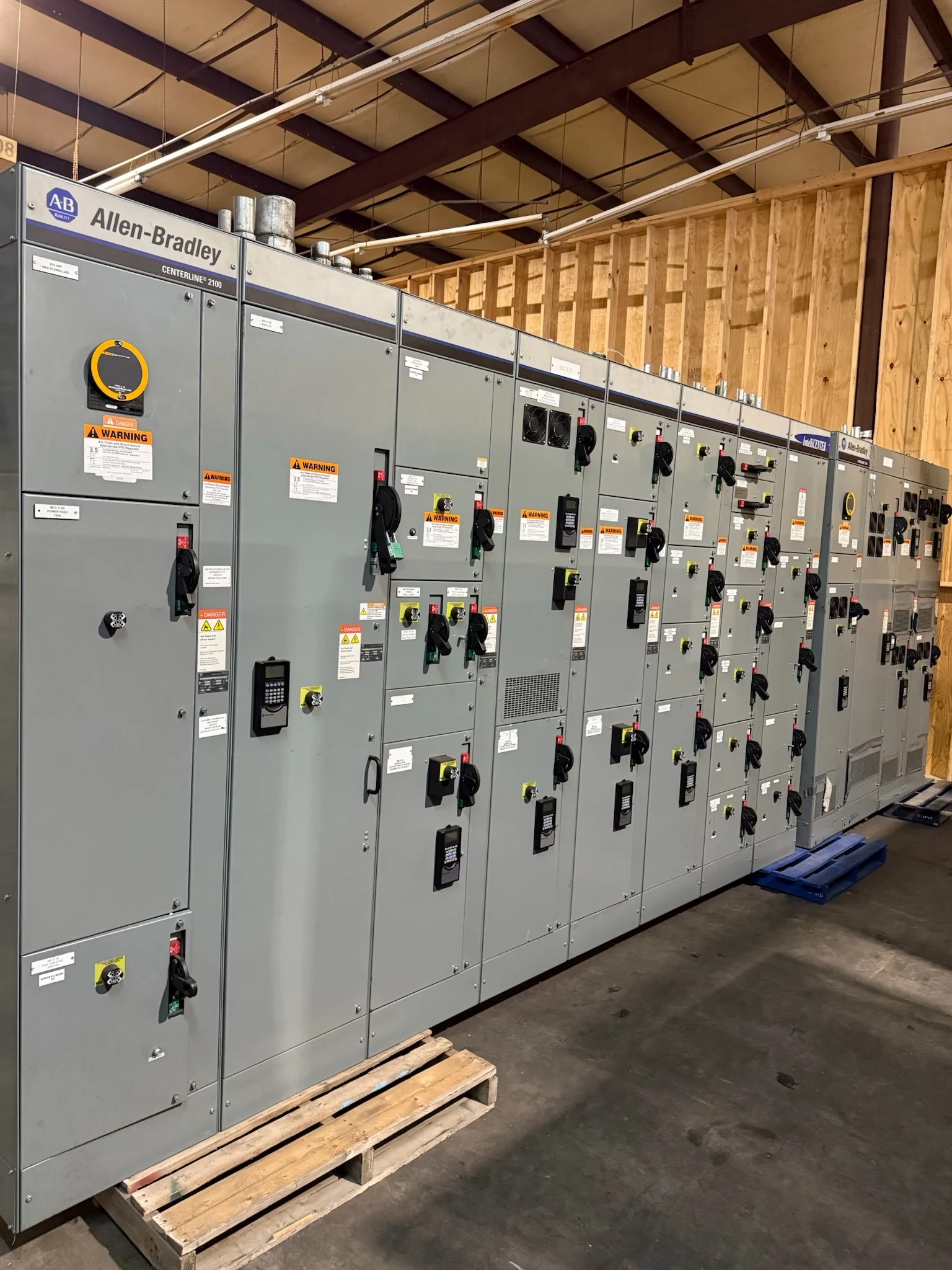
Switchgear communications can turn meter readings, breaker states and alarms into useful information for a facility’s operating team. The electrical assembly and the network must be specified together: a compatible plug alone does not establish what data will be available, who may issue commands, or how a loss of communication is handled. A clear interface package makes procurement and commissioning more predictable.
Define the operational purpose first
Start with the owner’s use cases, not a protocol name. An energy dashboard may need periodic demand and consumption values; an operations center may also need breaker position, trip indication and communication-failure alarms. Separate information needed immediately from historical data that can tolerate slower updates. Each additional device and point affects integration effort and testing.
Provide the manufacturer with the one-line, device schedule, intended monitoring locations and the receiving system’s requirements. Identify whether the building management system, an electrical SCADA system or another platform will consume each signal. Mark which indications are required at delivery and which are future allowances; a spare network port alone does not ensure future data access.
Match protocols to actual devices
Specify the protocol and physical interface together. For example, Modbus RTU typically communicates over a serial connection, while Modbus TCP uses an Ethernet network; the names are related, but the connections are not interchangeable. Confirm the communication options supported by each proposed meter, relay or breaker trip unit rather than assuming identical features across a lineup.
A gateway may translate between devices and the owner’s network, reducing the number of direct connections. It also adds a powered component, configuration work and another potential failure point. The proposal should identify the gateway supplier, supported protocol versions, device limits and responsibility for mapping, configuration backups and replacement. Confirm that required events and quality indicators survive any translation.
Draw the network boundary
Show every connection from the assembly to the owner’s designated network handoff, including switches, gateways, cable media and ports. Serial multidrop can reduce cabling where supported, but shared segments require coordinated addressing and device-specific design. Ethernet may simplify integration with an established network, while fiber may be appropriate where distance or electrical isolation warrants its added interface cost.
Agree on network segmentation, addressing, remote access and the party maintaining switches and software before ordering. The owner’s security team should define permitted traffic and credentials; a device supporting a familiar protocol is not automatically secure. Distinguish monitoring access from control privileges, and document what remains available locally if the network or communications power fails.
Make the point list a contract document
For every point, identify its source device, unique tag, description, data type, units, scaling and expected update rate. For register-based interfaces, include the vendor’s register reference, addressing convention and multiword data order. Specify whether a status represents a device’s actual position, a trip indication or a communication-derived value; these are not interchangeable.
Record alarm priority, timestamp source, quality or stale-data behavior, and whether acknowledgments or resets are required. If remote commands are proposed, define the authorized user, local-versus-remote selection, confirmation feedback and applicable permissives. Communications must not be assumed to replace independent protective functions; the engineer and owner should review failure behavior and control authority for the actual design.
Price the physical and documentation interfaces
A direct manufacturer of new assemblies needs to know which devices, communication modules, network hardware and wiring are included. Identify the external cable entry, termination location, media type and control-power source. The contractor’s field cabling and the owner’s network equipment may be outside the assembly scope, so make those boundaries explicit in the quotation.
Request communication architecture drawings, device schedules, terminal details, a point list, configuration files where available and device manuals as project deliverables. Check whether monitoring hardware affects enclosure space, access or auxiliary power. An early review can avoid adding components after fabrication begins, when changes may affect both layout and the project schedule.
Assign commissioning and turnover
Set a factory test scope before purchase: identify representative points, simulated inputs, expected values and pass criteria, along with who witnesses and records results. The integrator can then use the approved map to prepare the receiving system. Reserve time for resolving mismatched scaling, addresses and missing status information rather than treating connectivity as complete acceptance.
At site, assign the installer, integrator and owner responsibility for field connections, end-to-end checks and acceptance of alarms and any authorized controls. Plan network access and outage windows with the broader electrical schedule, and document failure indications and outstanding items. Qualified electrical personnel must perform electrical work under site safety procedures; final turnover should include approved as-built maps, test records and configuration backups.
LET'S BUILD SOMETHING RELIABLE — 03
Ready to talk
switchgear?
Tell us about the new equipment your project needs. Include as much or as little detail as you have today.
(951) 403-5738CALL TO DISCUSS YOUR PROJECT