
BUILT IN THE USA. READY FOR YOUR PROJECT.
Switchgear Handoff to Installers
A successful switchgear handoff begins before a truck reaches the jobsite.
DIRECT FROM THE MANUFACTURER / NEW EQUIPMENT
THE MANUFACTURER’S PERSPECTIVE — 02
A successful switchgear handoff begins before a truck reaches the jobsite. The specifying engineer, electrical contractor and facility owner need a common understanding of what the newly manufactured assembly includes, how it will arrive and who accepts each field interface. A direct manufacturer serving San Antonio, South Texas and projects nationwide can coordinate those details with the installation team as the design and delivery plans mature.
Give installers the approved drawing set
Identify one controlled set of approved drawings and its revision date before installation planning starts. Include the one-line, equipment elevations, floor plan, connection diagrams, terminal schedules and applicable manufacturer instructions. The contractor can then compare the lineup footprint and cable entry with the actual room, foundation and surrounding work.
A drawing approval does not settle every field responsibility. Mark who provides anchors, incoming and outgoing conductors, grounding connections, remote control wiring and any transition to a transformer or busway. Route discrepancies through the engineer and manufacturer rather than letting a field assumption become an undocumented design change.
Plan receiving, storage and rigging
Request shipping dimensions, individual section weights, designated lifting provisions and the handling instructions for the actual lineup. The rigging contractor needs this information alongside the delivery route, loading area, door openings, floor capacity and access restrictions. Check whether the equipment can travel to its final position without obstructing other trades.
Assign someone to inspect each shipment for visible damage and missing packages, document exceptions and notify the responsible parties promptly. Agree on an appropriate protected storage location and the applicable manufacturer storage requirements if the room is not ready. Extra handling or staging may affect the project budget and schedule.
Make shipping splits a defined field interface
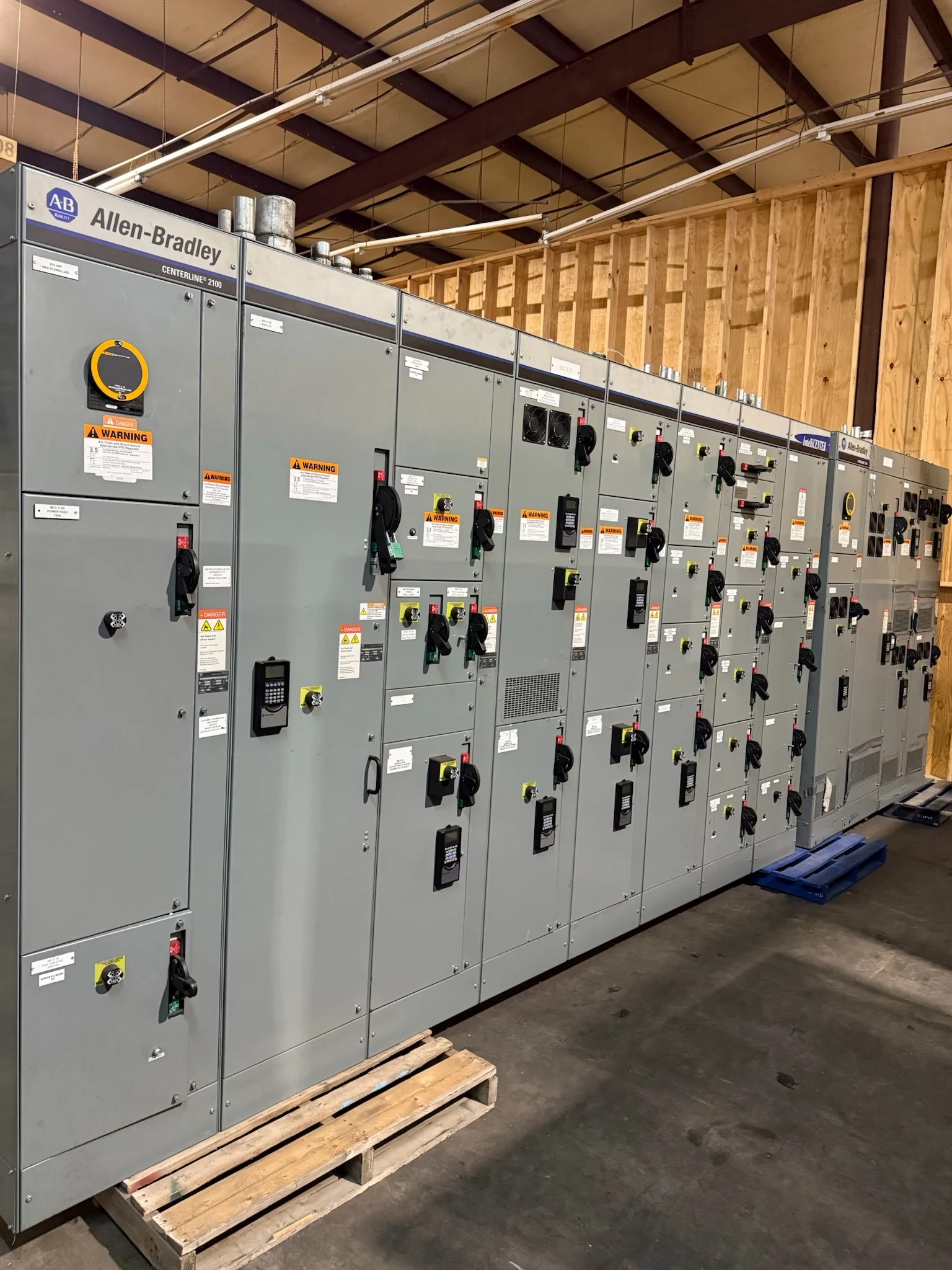
A long lineup may ship in several sections to fit transportation or building access constraints. Smaller sections can ease delivery, but they introduce field alignment and assembly work. Identify each split on the approved drawings, and confirm which shipping section belongs in each position and which connection materials accompany it.
The purchase scope should state who provides the field splice components, barriers, hardware and interconnecting control wiring, as applicable, and who performs and inspects the work. Ask the manufacturer for section-specific assembly documents and a packing list. Have the engineer resolve any discrepancy before the work proceeds.
Coordinate terminations and fastening documentation
The contractor should compare approved terminal details with the planned conductor material, size and number of runs, along with cable entry direction and available bending space. The design engineer remains responsible for the project conductors and grounding design; the equipment manufacturer should confirm the intended connection provisions in the assembly.
Obtain the applicable fastening and torque instructions for field connections, including any manufacturer markings or component-specific documentation. Qualified personnel follow the applicable instructions and site safety procedures, using suitable tools; the handoff should specify whether records are required and who reviews them. Do not substitute a generic torque value for project-specific information.
Separate factory checks from field acceptance
Request a list of factory inspections and tests with the records to be delivered, then establish a separate field acceptance plan. Depending on the design, field work may include inspection of shipping splits and terminations, insulation testing and verification of control wiring or interlocks. Define the procedure, acceptance criteria and responsible party for each item.
The engineer or designated study provider should identify required protective settings and approvals, while the testing contractor reports results and unresolved deficiencies. Qualified personnel perform electrical work under the site safety program. The owner controls energization authorization after prerequisites, utility coordination where applicable and outstanding issues have been addressed.
Build the handoff into the schedule
Set milestones for approved drawings, release for manufacture, shipping information, site readiness, delivery, field assembly and testing. If a split connection kit or a revised terminal detail arrives after installation starts, other work may have to wait. Track open decisions and identify who must approve changes that affect equipment or adjacent construction.
For turnover, assemble the final manufacturer documents, instructions, test reports, approved settings and a log of remaining actions. Record field changes through the project team so the responsible party can prepare accurate as-built drawings. Agree on who maintains the final package and closes outstanding issues after acceptance.
LET'S BUILD SOMETHING RELIABLE — 03
Ready to talk
switchgear?
Tell us about the new equipment your project needs. Include as much or as little detail as you have today.
(951) 403-5738CALL TO DISCUSS YOUR PROJECT