
BUILT IN THE USA. READY FOR YOUR PROJECT.
Switchboard vs. Panelboard
A switchboard and a panelboard can both distribute power through protective devices, but they solve different layout and procurement problems.
DIRECT FROM THE MANUFACTURER / NEW EQUIPMENT
THE MANUFACTURER’S PERSPECTIVE — 02
A switchboard and a panelboard can both distribute power through protective devices, but they solve different layout and procurement problems. Choosing between them starts with the electrical system, not simply the size of the enclosure. Engineers, contractors and owners should compare feeder duties, available fault current, installation space and future changes before committing a new assembly to the project.
Start with the distribution role
A switchboard often sits near a service or another major source and distributes power to multiple downstream feeders. Its construction can accommodate combinations of mains, feeder devices and metering, subject to the engineered design. A panelboard commonly groups protective devices for branch circuits or smaller distribution feeders closer to the loads they serve.
These are typical roles, not rigid rules: either assembly must be evaluated for its actual source, devices and loads. For a building with multiple floors, a main switchboard feeding floor panelboards may reduce long individual branch-circuit runs. A compact project might need a different arrangement if the load schedule and equipment ratings support it.
Construction and installation affect the choice
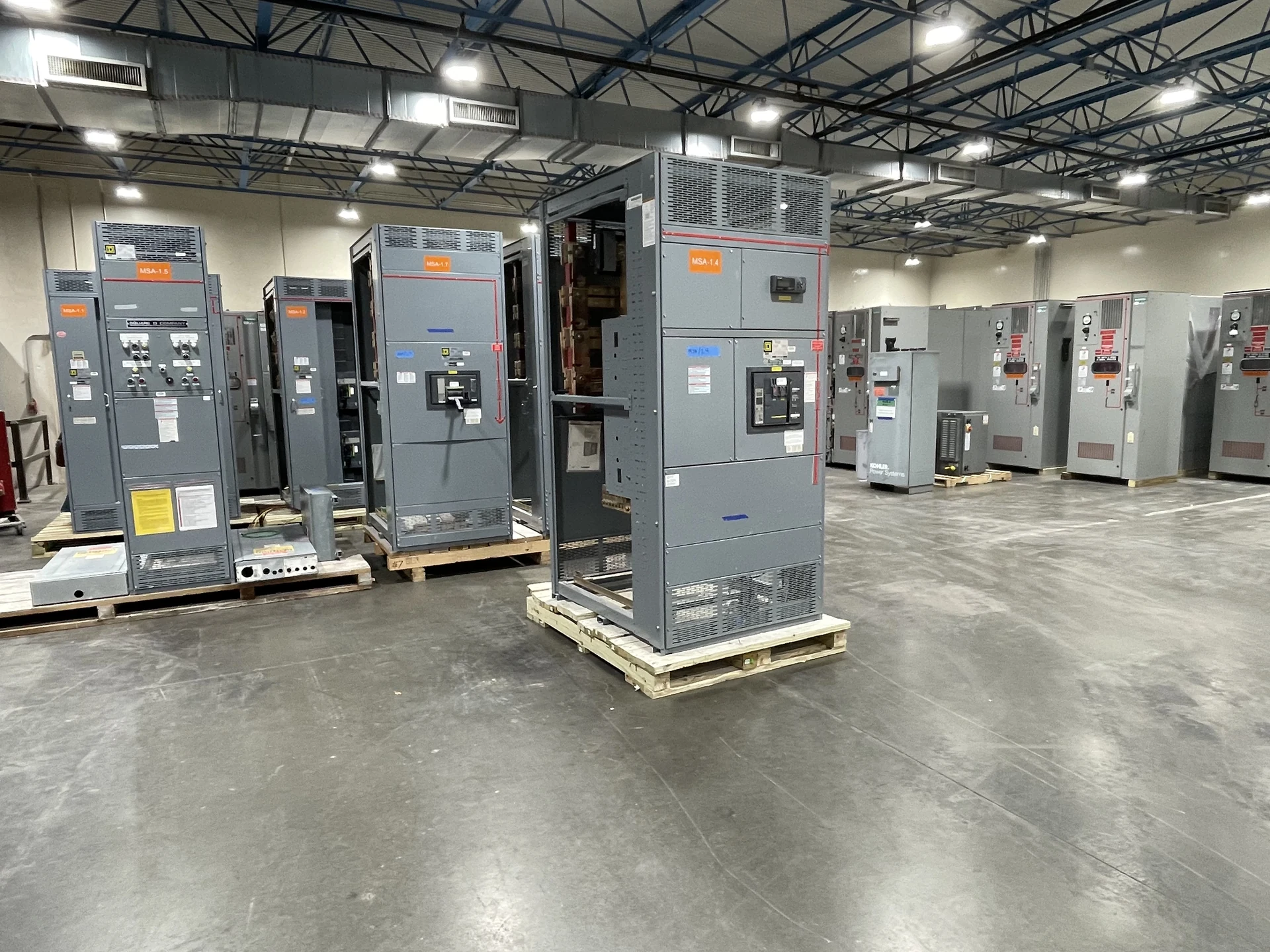
Switchboards are commonly floor-mounted assemblies, potentially arranged in multiple sections. Panelboards are typically housed in cabinets and may be surface-mounted or recessed where the construction permits. Switchboard access can be front-only or require other access depending on its design; do not assume that every lineup can be placed against a wall.
Compare the proposed equipment elevations with the actual room, wall construction, delivery route and required working space. Indicate cable entry direction, conductor sizes and quantities, bending space, mounting requirements and clearance for doors. The design team and authority having jurisdiction should evaluate applicable access and clearance rules for the particular installation.
Check protection at both ends of each feeder
The one-line diagram should identify the source, main and feeder protective devices, downstream panels and the loads they serve. Provide system voltage and configuration, calculated load and available fault current at each relevant location. The assembly rating and protective-device interrupting ratings must be suitable for the duty at their respective points.
A device that fits physically is not necessarily acceptable electrically. Share coordination objectives and the proposed device characteristics with the engineer performing the protection study. Selective coordination, when required or desired, depends on the actual upstream and downstream devices and fault range; changing a breaker during procurement can alter the study outcome.
Identify standards and service interfaces
The equipment category affects which standards are applicable. UL 891 addresses appropriate switchboard assemblies, while UL 67 addresses panelboards. Ask the manufacturer to identify the proposed assembly standard and verify any required listing and its scope for the exact configuration; a component marking alone does not establish the listing of an entire assembly.
For service equipment, confirm utility metering, termination arrangements and approval requirements early. The electrical designer should specify the grounded conductor, equipment grounding and bonding arrangement appropriate to each location; service and downstream assemblies may have different requirements. Coordinate conductor entry and termination details with the utility and installing contractor rather than assuming interchangeable interfaces.
Balance expansion against room and budget
Future flexibility is more than an empty position. A spare device, prepared space and provision for a future section can have different initial costs and expansion consequences. Ask the engineer to check bus capacity, available physical space, short-circuit duty and the effect of anticipated additions on the upstream distribution system.
Distributed panelboards can shorten some branch runs and put circuit identification near loads, but add feeder paths, wall space and equipment locations to maintain. A larger central assembly may consolidate distribution while requiring more floor area and longer downstream wiring. Compare installed scope, access and operating needs, not enclosure price alone.
Make the quotation and handoff useful
When requesting new equipment directly from a manufacturer, provide the current one-line, load and feeder schedules, fault-current information, room dimensions, enclosure environment and required standards. Identify metering, communications, spare capacity and component-origin requirements if applicable. Ask for drawings, device schedules, listing details, testing scope and any exceptions so proposals can be compared on equal terms.
Schedule the design review, utility approval if needed, component procurement, fabrication, delivery and site work as connected milestones rather than assuming a fixed lead time. Assign responsibility for foundations or mounting, field connections, protection settings and commissioning. Qualified electrical personnel must plan and perform installation, testing and energization under applicable site procedures and manufacturer instructions.
LET'S BUILD SOMETHING RELIABLE — 03
Ready to talk
switchgear?
Tell us about the new equipment your project needs. Include as much or as little detail as you have today.
(951) 403-5738CALL TO DISCUSS YOUR PROJECT