
BUILT IN THE USA. READY FOR YOUR PROJECT.
Marion Switchgear Manufacturing
A Marion, Texas project can be electrically well designed and still run into trouble if the new distribution assembly cannot reach its room or its feeders cannot enter as planned.
DIRECT FROM THE MANUFACTURER / NEW EQUIPMENT
THE MANUFACTURER’S PERSPECTIVE — 02
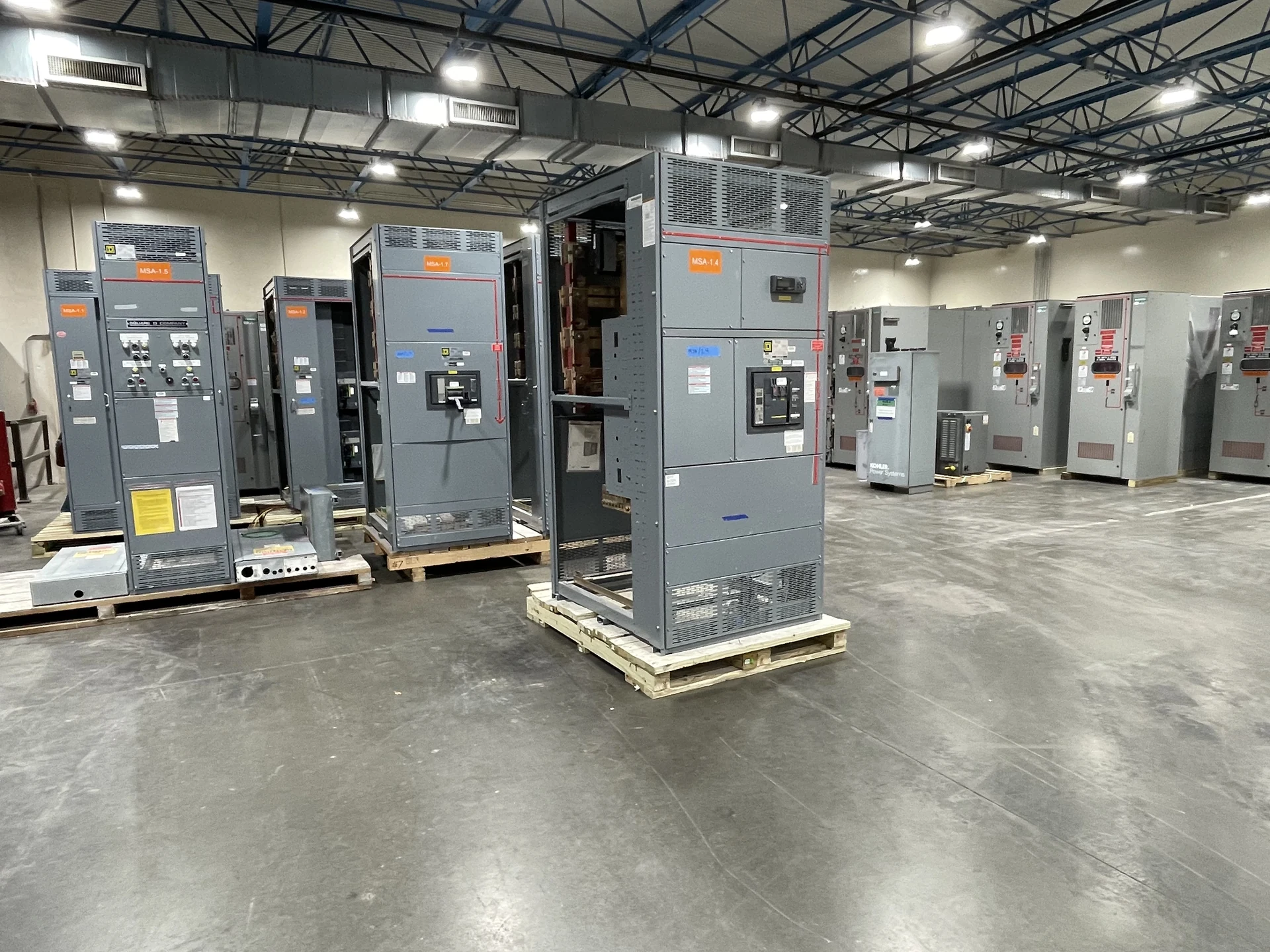
A Marion, Texas project can be electrically well designed and still run into trouble if the new distribution assembly cannot reach its room or its feeders cannot enter as planned. Working directly with an American manufacturer of new switchgear and power-distribution assemblies helps owners and contractors bring electrical requirements, physical access, and purchasing decisions into the same conversation before construction details are fixed.
Begin with the distribution plan
Provide a current one-line diagram showing the source, transformer or service connection, main device, feeder destinations, and any alternate supply. Add system voltage and phase, load and demand information, and the available short-circuit current at the proposed equipment. The engineer and manufacturer can then evaluate the assembly and protective devices against the actual project duty.
For a growing facility, distinguish a genuinely reserved future feeder from an empty space that may need more engineering later. Indicate expected loads, metering, control signals, and the intended expansion path. Extra capacity and space can increase the initial footprint and cost, but late additions may be harder to accommodate within a constrained room.
Draw the room around the equipment
Give the manufacturer a dimensioned equipment-room plan, including columns, doors, ceiling obstructions, adjacent equipment, and the finished floor elevation. Ask for an equipment elevation and footprint showing door swings and access faces. A lineup that fits between walls on paper may still conflict with a structural column or block a route out of the room.
The project engineer and authority having jurisdiction should determine required working space, dedicated equipment space, and access under the applicable codes and site conditions. Do not treat the equipment depth alone as the space requirement. Coordinate ventilation, heat rejection, anchorage, and access for maintenance with the building and structural teams before approving the layout.
Resolve feeder entry before conduit is placed
Show whether incoming and outgoing feeders approach from above or below, their destinations, conductor quantities and sizes, and the intended point of termination. The contractor should compare conduit or trench routes with the proposed lineup, while the manufacturer checks available termination and conductor-bending space. Routing decisions affect section width as well as installation labor.
A bottom-entry design may fit a planned underground route but can compete with foundation details or leave too little room for bends. Top entry may avoid that conflict while increasing overhead coordination. Identify separate control and communications pathways, grounding connections, and any utility metering interface; have each responsible party approve its connection requirements.
Make delivery and unloading part of the design
For the Marion jobsite, document the route from the unloading point to the final equipment location. Check gate and doorway dimensions, turning room, overhead obstructions, floor and pavement load limits, and the space available for lifting or moving equipment. The installer and rigging provider should assess the actual route rather than assume a truck can reach the room.
Ask for estimated shipping dimensions, weights, lifting provisions, and any proposed shipping splits during submittal review. Smaller sections may ease handling through a tight entrance, but they introduce field alignment and reassembly interfaces. Clarify who supplies lifting equipment, receives and protects the shipment, and completes any field connections in accordance with the approved instructions.
Compare quotes by scope, not footprint alone
A useful quotation identifies the assembly configuration, device and bus requirements, enclosure environment, feeder provisions, and documented exceptions. Specify whether the project needs an indoor or outdoor arrangement and describe exposure, available space, and accessibility. Construction choices should be evaluated against the job requirements rather than selected solely for the smallest cabinet.
Request a submittal package with the one-line, elevations, connection locations, anchorage information, equipment ratings, and proposed inspection or test scope. Where a switchboard is specified, identify whether UL 891 listing is required and verify the proposed assembly’s actual listing and scope. Other equipment types require their own applicable standards and project-specific review.
Coordinate release, installation, and turnover
Agree on the sequence for drawing review, approval, manufacturing release, component procurement, inspection, and shipment. Ask which information remains outstanding and how changes after approval affect cost or schedule. Delivery timing depends on design decisions, component availability, and the work agreed for the order; align it with building readiness and the receiving plan.
Assign responsibility for permits, utility coordination, foundations, cable installation, protective settings, field testing, and final records. For an occupied site, the owner and contractor should coordinate affected loads and outage windows. Qualified electrical personnel must perform installation, testing, and energization under the project safety procedures; turnover should include approved drawings, relevant test records, and operating information.
LET'S BUILD SOMETHING RELIABLE — 03
Ready to talk
switchgear?
Tell us about the new equipment your project needs. Include as much or as little detail as you have today.
(951) 403-5738CALL TO DISCUSS YOUR PROJECT