
BUILT IN THE USA. READY FOR YOUR PROJECT.
Electrical Switchboards for Airports
An airport switchboard distributes power across facilities that cannot all tolerate the same interruption.
DIRECT FROM THE MANUFACTURER / NEW EQUIPMENT
THE MANUFACTURER’S PERSPECTIVE — 02
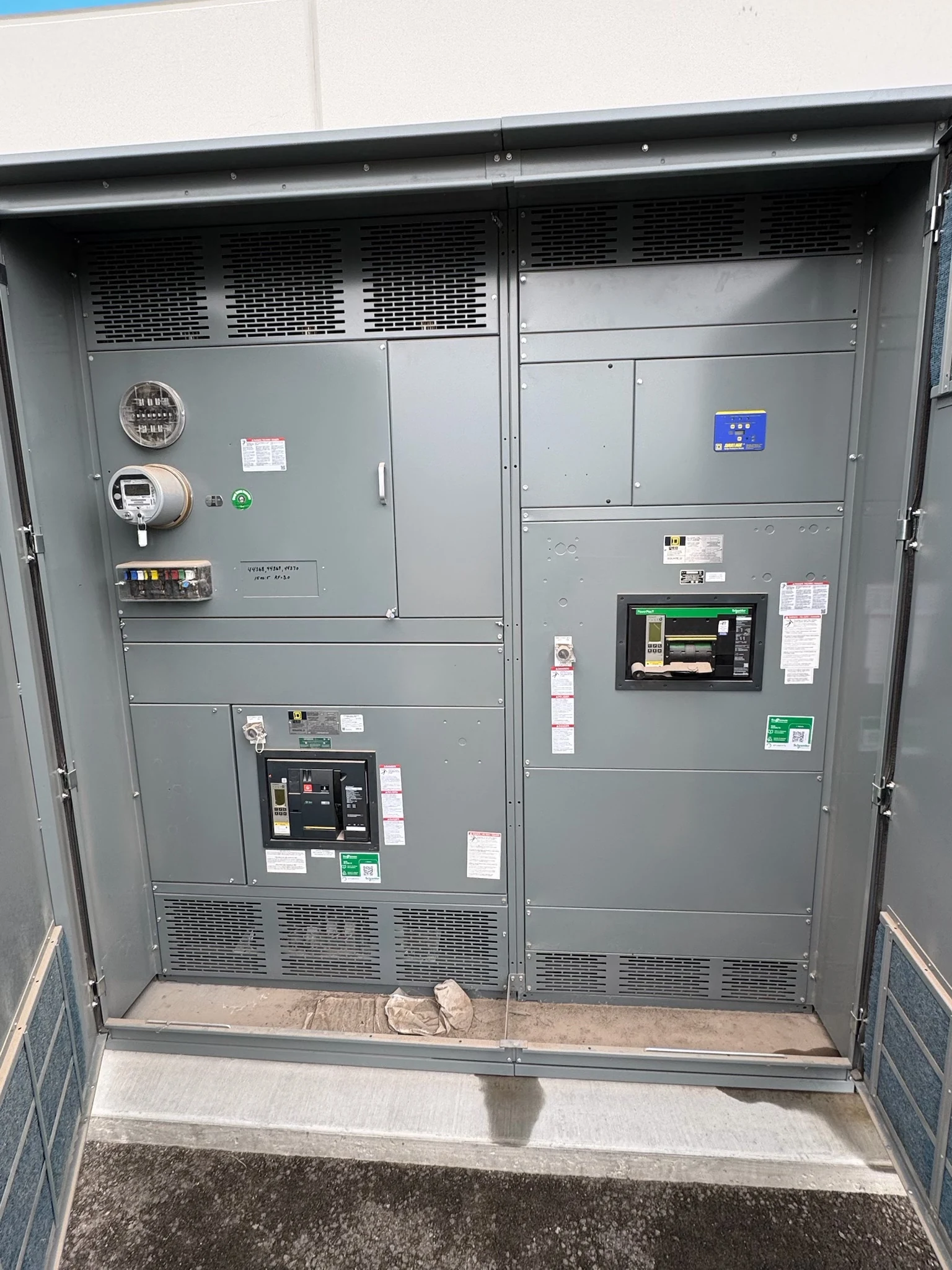
An airport switchboard distributes power across facilities that cannot all tolerate the same interruption. Terminal systems, tenant spaces and airfield infrastructure have different loads, access constraints and backup requirements. For owners and specifiers, a useful procurement package ties those operating priorities to a new low-voltage switchboard, its upstream sources and the downstream feeders that must remain coordinated throughout construction.
Map the airport before arranging feeders
Start with a current one-line diagram and a load schedule identifying the source, destination and expected demand of each feeder. Separate terminal functions such as baggage handling and passenger processing from tenant distribution and airfield-related loads. Note who controls each circuit and which services require continuity during an interruption.
Where airfield lighting is in scope, identify the interface to its dedicated controls or regulators rather than assuming the switchboard directly controls individual lights. Feeders may travel to remote equipment rooms or other distribution points. Record their routing and anticipated growth: spare breaker spaces alone do not establish that the bus or source can support future loads.
Define normal and alternate power boundaries
Show which loads receive generator or other alternate-source power, and where transfer equipment sits relative to the switchboard. A single alternate source may have less capacity than the normal source, so the design team should identify load priorities and any intended load shedding rather than treating every feeder as automatically backed up.
Provide the proposed source arrangement, transfer equipment interfaces, control signals and required operating states. The engineer should coordinate neutral switching, grounding and protection with the transfer and generator designs. Separating critical and noncritical distribution can make the backup strategy clearer, but additional sections and connections affect space, cost and installation planning.
Match protection to the actual system
Request utility service and metering requirements early, along with available fault-current information at the proposed connection. The engineer should evaluate the contribution of each relevant source, including alternate power, and specify voltage, phase, wire configuration, continuous current and required assembly fault duty. Breaker interrupting ratings and the complete assembly rating both need project-specific review.
Protection choices also influence how much of the airport loses power when a downstream fault occurs. Provide device data for a coordination study and identify circuits for which selective coordination is required or desired. Verify the study across the applicable operating configurations; a device selection by itself does not guarantee selective coordination at every fault level.
Resolve room, cable and airside interfaces
The equipment layout must fit the electrical room and its delivery route, not just the floor plan. Supply door and corridor dimensions, available working and maintenance space, cable entry direction, conductor quantities and size, and any busway connection details. Coordinate shipping sections, lifting, anchorage and field connections with the installation contractor.
Identify whether equipment is indoors or exposed to weather, moisture, dust or corrosive conditions, and describe ventilation and ambient limits for engineering review. On the airfield side, secure-area access and restricted work periods may affect where a lineup is placed and how installers reach it. The design team must verify applicable clearances and access requirements.
Plan construction around airport operations
For an expansion or replacement, map every affected load to its operational owner before setting the construction sequence. Airport operations, tenants, the utility and the electrical contractor may each need to approve different outage windows. Confirm whether temporary distribution is necessary and who designs, supplies and removes it.
A phased plan should identify temporary source capacity and protection, transition interfaces, commissioning hold points and a contingency if an outage cannot proceed. Keep the new assembly design aligned with those boundaries as drawings change. Qualified personnel perform field work and energization under the site safety plan, applicable codes and equipment instructions; the owner coordinates operational approvals.
Specify the package and review its schedule
For a direct-manufacturer quotation, send the one-line, feeder schedule, fault and source data, physical constraints and required delivery milestones. Ask for a clear scope covering the assembly, metering, protective devices, control terminals, shipping splits and documentation. Compare exceptions as well as the quoted configuration, especially where transfer equipment or field wiring is supplied separately.
Submittals should show elevations, dimensions, one-line and wiring diagrams, device schedules and connection details; agree on factory inspection or functional checks and the records required at turnover. If a UL 891 listing is specified for the switchboard, verify the proposed assembly and listing scope for the project. Allow time for drawing review, component availability, fabrication, testing and coordinated site acceptance.
LET'S BUILD SOMETHING RELIABLE — 03
Ready to talk
switchgear?
Tell us about the new equipment your project needs. Include as much or as little detail as you have today.
(951) 403-5738CALL TO DISCUSS YOUR PROJECT