
BUILT IN THE USA. READY FOR YOUR PROJECT.
Assessing Switchgear Condition
A switchgear condition assessment turns scattered maintenance records and field observations into a basis for action.
DIRECT FROM THE MANUFACTURER / NEW EQUIPMENT
THE MANUFACTURER’S PERSPECTIVE — 02
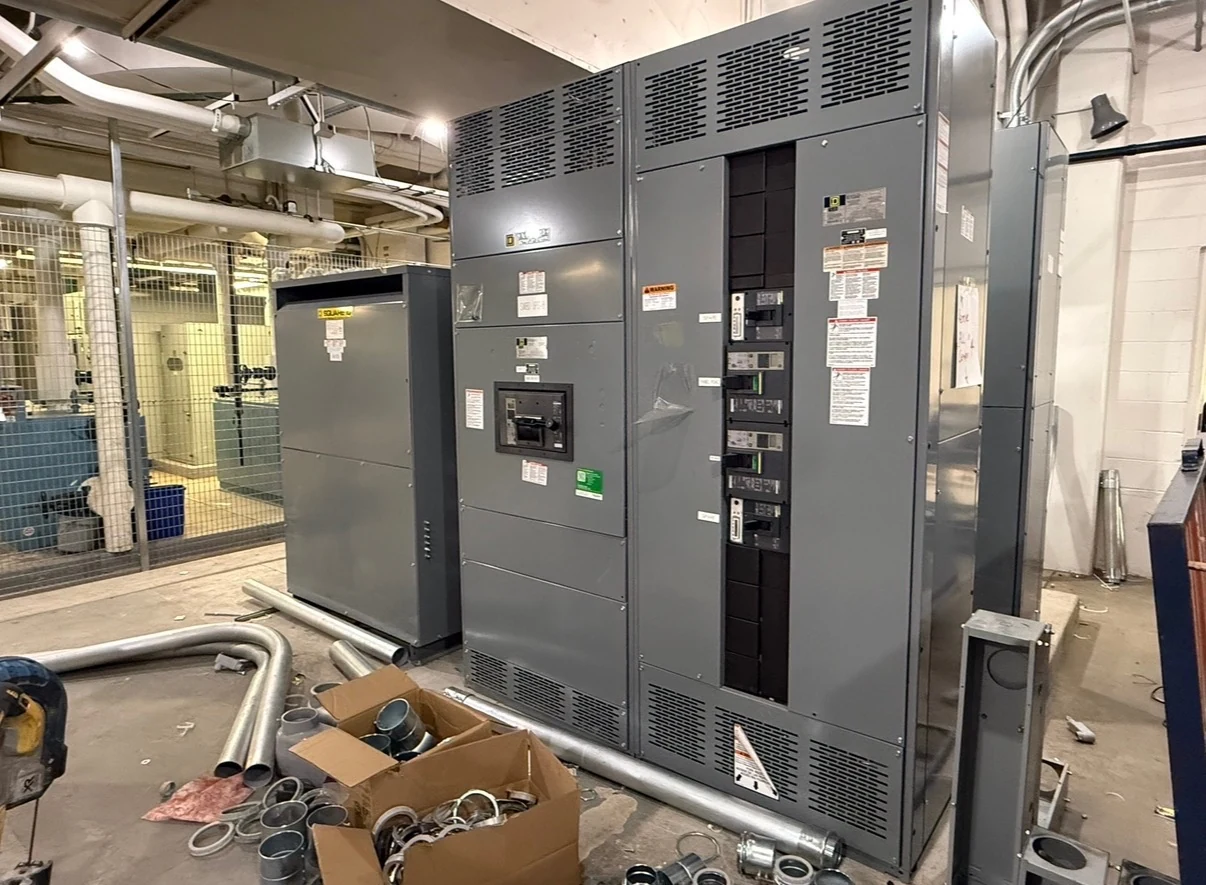
A switchgear condition assessment turns scattered maintenance records and field observations into a basis for action. Age matters, but a date on a nameplate cannot by itself predict failure. Facility owners, contractors and specifying engineers need to connect equipment history, operating environment and inspection evidence with the consequences of an interruption, then decide what further investigation or new equipment planning is justified.
Build a defensible equipment history
Start with an inventory of lineups, sections and major protective devices, identifying each by location and circuit rather than relying only on a building-wide age. Collect nameplate information, one-line diagrams, load records, settings and previous test reports. Note missing documents and changes that have not been reflected on the drawings; those gaps affect confidence in later conclusions.
Review the history for recurring trips, water entry, unusual operating events and changes in loading or duty. A long interval without a recorded problem is not proof of good condition if inspections were infrequent. Conversely, a newer installation can warrant attention when its service conditions or documented problems differ from the assumptions made at design.
Connect environmental exposure to evidence
Record whether the equipment is exposed to humidity, condensation, dust, corrosive vapors, heat or outdoor weather. Look at the electrical room as well as the enclosure: ventilation restrictions, water pathways and housekeeping can influence deterioration. In South Texas, for example, a humid or corrosive setting may merit closer evaluation, but the actual conditions at the site determine the response.
Have qualified personnel document accessible signs such as corrosion, damaged seals or deposits under the facility's safety rules. The significance depends on location and extent: surface staining on a cabinet is not automatically equivalent to deterioration at an electrical connection. An assessment should identify suspected causes and recommend the appropriate qualified follow-up rather than assign a universal condition limit.
Interpret thermal findings in context
Thermal imaging can identify an unusual temperature pattern that deserves investigation, but a picture alone does not establish the cause or prove a connection is safe. Load, ambient temperature, operating state, viewing angle and surface properties affect what a camera sees. A heavily loaded feeder may look warmer than a lightly loaded neighbor for reasons unrelated to a defect.
Ask the qualified inspection provider to record the equipment identity, relevant load and environmental conditions, image location and any limitations on visibility. Compare images from similar conditions where available, and relate findings to maintenance and test history. Exposure for inspection and any follow-up work must be planned and performed by qualified personnel under the site's electrical safety procedures.
Rank risks without inventing thresholds
Rank findings by both the evidence of deterioration and the effect of a failure. A questionable condition on a feeder serving a critical process may deserve different scheduling from a comparable finding on a readily interrupted load. Document the basis for each priority, including uncertainty, affected loads and whether alternate supply is actually available and suitable.
Do not turn one temperature difference, one test result or an equipment age into an automatic replacement rule. A qualified engineer or service specialist should evaluate trends against applicable manufacturer instructions, project criteria and the condition of the complete assembly. Escalate indications of immediate danger through the facility's established safety and incident-response process.
Translate findings into a new-equipment scope
If replacement is being considered, distinguish observed defects from the requirements for the new lineup. Give the manufacturer the current one-line, source and load information, available fault-current data, required protective functions, utility interface and desired future capacity. The specifying engineer should verify the design basis; existing nameplate values alone may not reflect today's system.
Include photographs and verified dimensions of the room, entrances, cable routing and proposed connection locations. Identify constraints on working space, shipping sections and access for maintenance. Where an appropriate switchboard is specified to UL 891, request verification of the proposed assembly's listing and scope; other equipment types require their own applicable standards and project review.
Plan the report, procurement and outage together
The assessment deliverable should link each observation to its location, supporting record, risk, recommended next step, responsible party and review date. Separate confirmed facts from assumptions and unresolved questions. This gives the owner a usable decision register and gives bidders a consistent basis for identifying engineering exceptions and comparing proposed new assemblies.
Agree on milestones for investigation, design, submittal review, manufacturing, delivery and installation without assuming a fixed lead time. The owner and electrical contractor should coordinate outage windows, temporary power needs and affected occupants with the utility where relevant. Define responsibility for site verification, field connections, acceptance testing and updated drawings so the equipment purchase does not leave critical interfaces unassigned.
LET'S BUILD SOMETHING RELIABLE — 03
Ready to talk
switchgear?
Tell us about the new equipment your project needs. Include as much or as little detail as you have today.
(951) 403-5738CALL TO DISCUSS YOUR PROJECT