
BUILT IN THE USA. READY FOR YOUR PROJECT.
Motor Control Centers vs. Switchgear
A motor control center (MCC) and switchgear may appear together on the same one-line, but they solve different problems.
DIRECT FROM THE MANUFACTURER / NEW EQUIPMENT
THE MANUFACTURER’S PERSPECTIVE — 02
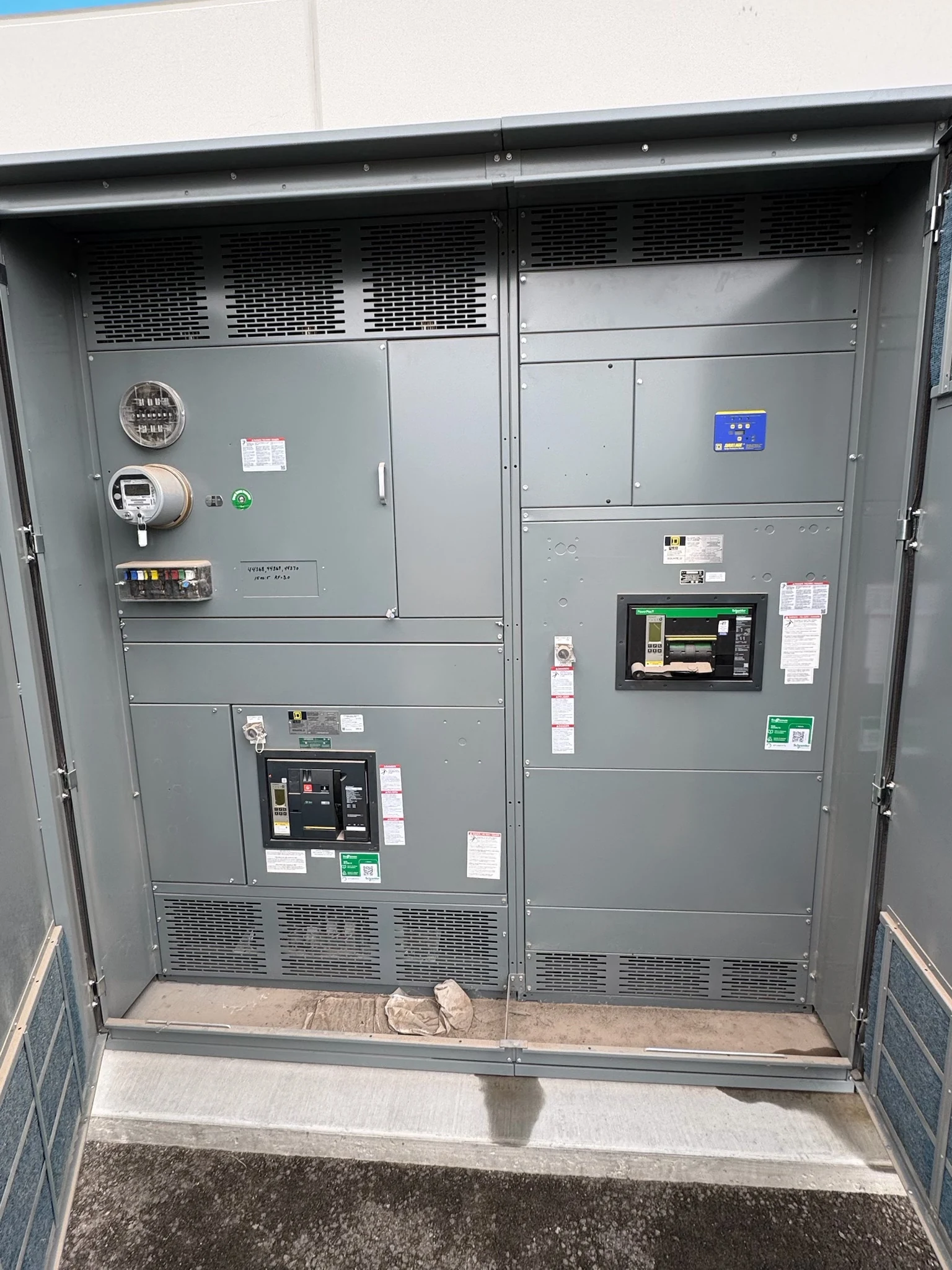
A motor control center (MCC) and switchgear may appear together on the same one-line, but they solve different problems. Switchgear organizes power switching and protection across a distribution system; an MCC groups the controls and protection associated with individual motors. Engineers, contractors and owners should define both roles before requesting new equipment, rather than treating the two assemblies as interchangeable.
What each assembly is meant to do
An MCC typically contains a common bus and multiple units for motor circuits. Depending on the design, a unit can combine a disconnecting means, short-circuit protection, a starter or drive, and motor overload protection. Grouping motor circuits makes it easier to organize equipment serving pumps, fans and production machinery.
Switchgear primarily receives and distributes power through switching and protective devices. A lineup can serve several feeders, transformers or other distribution equipment, including an MCC. Some switchgear designs can also serve motor circuits directly when engineered for that duty; the distinction is the intended system function, not a rule that a motor must always connect to an MCC.
Decide where control belongs
Consider a pump station with several independently controlled pumps. An upstream switchgear feeder can supply an MCC, while separate MCC units handle individual motor starting and protection. The engineer determines where to place each protective device and disconnect, and whether the process requires across-the-line starters, reduced-voltage starting or adjustable-speed drives.
An MCC is attractive when many motors need concentrated control and consistent access. A distribution lineup may be more appropriate when the principal requirement is feeder switching and protection. Drive heat, motor cable lengths, harmonics and available room can favor locating drives elsewhere. Compare the complete layout, not merely the number of vertical sections.
Protection has to work as a system
Motor overload protection addresses sustained motor loading; short-circuit protection addresses a different electrical fault. The selected combination must be suitable for the motor circuit and the assembly. The specifying engineer should review starting characteristics and protective settings so normal starting does not cause unnecessary trips while required protection remains effective.
Provide the available fault current at each proposed equipment location, including source contributions and the basis of the calculation. Review interrupting ratings, assembly short-circuit ratings and applicable withstand requirements together, not as interchangeable numbers. A coordination study can compare upstream feeder protection with MCC branch devices across relevant operating conditions; full selectivity should not be assumed.
Document power and control interfaces
The one-line should identify source arrangements, system voltage and phase, the MCC supply feeder, grounding, and any alternate source. Give each motor its horsepower or power, nameplate current, starting method, duty and expected load behavior. Indicate spare circuits and realistic growth assumptions rather than specifying an oversized bus without an engineering basis.
For controls, identify control-power sources, field devices, permissives, alarms and required response to loss of power. If a plant control system is involved, define the communication protocol, network connection, point list and responsibility for programming. The MCC supplier, controls integrator and installing contractor should agree on terminal boundaries and who tests each interface.
Compare construction and quote scope
Ask the direct manufacturer to quote new assemblies against the same drawings and equipment schedule. Compare incoming and outgoing devices, motor units, spare spaces, enclosure environmental requirements, cable entry, dimensions and access. A lower initial equipment scope may shift costs to field wiring, controls integration or later expansion, so identify exclusions and proposed substitutions.
State the applicable code, equipment standard and required listing in the specification, then verify the proposed assembly and its listing for the actual project. UL 845 may be relevant to a motor control center; UL 891 applies to appropriate switchboard assemblies, not automatically to switchgear or MCCs. The engineer and authority having jurisdiction resolve applicable requirements.
Plan submittals, delivery and turnover
Request a coordinated one-line, layout and elevations, unit schedule, wiring diagrams, connection details, component data and documented exceptions. Define factory inspection or functional testing, acceptance criteria and test records in the purchase scope. A reviewed point list and control narrative help expose missing signals before equipment is released for production.
Schedule design review, component procurement, fabrication, testing, shipping and installation as dependent activities; changes or component availability can alter the sequence. Coordinate receiving, rigging, field terminations and any outage with the owner and contractor. Installation, verification, energization and maintenance belong to appropriately qualified personnel following approved site safety procedures and manufacturer instructions.
LET'S BUILD SOMETHING RELIABLE — 03
Ready to talk
switchgear?
Tell us about the new equipment your project needs. Include as much or as little detail as you have today.
(951) 403-5738CALL TO DISCUSS YOUR PROJECT